

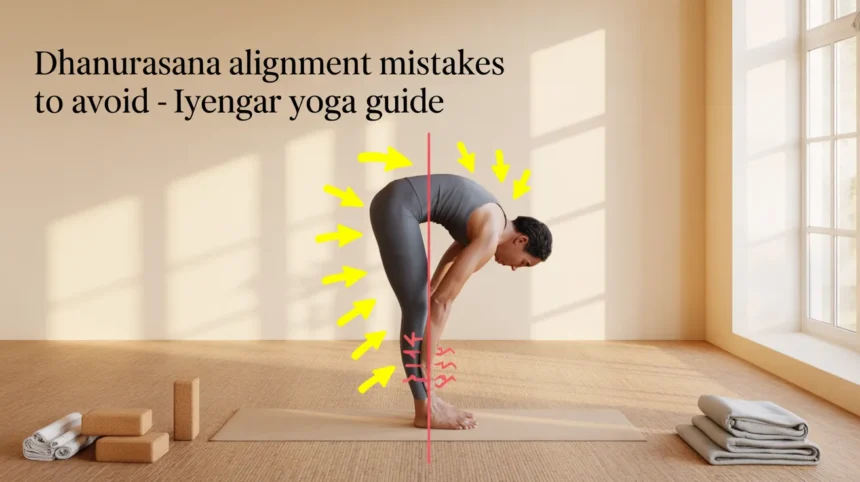
Dhanurasana, commonly known as Bow Pose, is a fundamental backbend in Iyengar Yoga that beautifully combines strength, flexibility, and balance. In this pose, your body forms a graceful bow, with the chest lifted, shoulders open, and legs engaging fully. While it looks elegant, Dhanurasana requires careful attention to alignment to gain maximum benefits and avoid injury.
Proper alignment is especially crucial in Iyengar Yoga, which emphasizes precise posture, safe joint placement, and mindful engagement of muscles. Even small misalignments can strain the lower back, shoulders, or neck, reducing the effectiveness of the pose.
In this article, we’ll guide you through the most common alignment mistakes in Dhanurasana and provide tips to practice safely, whether you’re a beginner or an experienced Iyengar Yoga practitioner.
Benefits of Dhanurasana
Dhanurasana is more than just a striking backbend—it’s a full-body pose that engages, stretches, and strengthens multiple muscle groups while offering mental and physiological benefits. Practicing it with proper alignment ensures that each benefit is maximized safely.
Strengthens Back, Spine, and Core
When you lift your chest and legs off the ground, your back muscles work to support the spine. Simultaneously, your core muscles engage to stabilize the torso. Over time, consistent practice of Dhanurasana can lead to a stronger, more resilient back and improved spinal health, which is particularly beneficial for those who spend long hours sitting or working at a desk.
Opens Chest and Shoulders
Dhanurasana encourages a deep opening of the chest and shoulder girdle. This helps counteract rounded shoulders and a hunched posture, which are common in modern lifestyles. For Iyengar practitioners, proper alignment ensures the chest lifts evenly, and the shoulders remain relaxed, providing a safe yet effective stretch.
Improves Posture and Energy
The pose helps lengthen the spine and correct postural imbalances, promoting a tall, aligned stance even outside of yoga practice. In addition, opening the chest and engaging large muscle groups stimulates circulation and energizes the body, leaving you feeling more awake and vibrant after practice.
Stimulates Digestive Organs
As the abdomen is gently compressed during the bow, internal organs like the stomach and intestines receive a mild massage. This can enhance digestion, improve metabolism, and support healthy organ function when practiced mindfully.
Sets the Stage: Why Alignment Matters
While Dhanurasana offers incredible benefits, improper form can reduce effectiveness and even cause injury. Aligning the spine, engaging the correct muscles, and avoiding tension are critical to experience these benefits fully. Understanding and correcting common mistakes is essential, which is why the next section focuses on alignment pitfalls and how to avoid them.
Common Alignment Mistakes in Dhanurasana
Even experienced practitioners sometimes fall into common alignment errors. Breaking these down helps you stay safe, gain the full benefits, and deepen your Iyengar Yoga practice.
Lifting the Chest Too High Too Soon
Explanation of the mistake: Beginners often try to lift the chest too aggressively, aiming for a dramatic backbend.
Why it’s harmful: This can strain the lower back and compress the lumbar vertebrae, leading to discomfort or injury.
Correct approach:
- Focus on lifting gradually, starting from engaging the core and legs.
- Keep the chest lifted without forcing it.
- Use a yoga strap or bolster for support if needed, especially in the early stages of practice.
Overarching the Lower Back
How it happens: When flexibility exceeds strength, the lower back may collapse excessively while the chest rises.
Risks:
- Compression in the lumbar region
- Lower back pain or strain
Correct spinal alignment tips:
- Distribute the backbend evenly along the spine.
- Engage the core and thighs to support the lift.
- Lengthen the spine rather than pushing the chest up alone.
Forcing the Legs or Feet Together
Common error in beginners: Trying to keep the legs or feet tightly together can create tension in the inner thighs and lower back.
How to engage thighs without tension:
- Actively press the tops of your thighs down toward the floor.
- Keep the legs naturally hip-width apart if needed for comfort.
Alternative positioning:
- Slightly separate feet or use a yoga strap around the ankles to maintain lift without strain.
Pulling Too Hard on the Ankles or Feet
Why it can strain shoulders and neck: Over-gripping the ankles can pull the shoulders forward or lift the chest incorrectly, causing tension in the neck and upper back.
Proper hand placement guidance:
- Hold the ankles gently and evenly.
- Keep elbows pointing backward, not outward.
- Engage legs and core to maintain the shape rather than relying solely on arm strength.
Holding Breath or Tensing Muscles
Importance of breath in Iyengar Yoga: Smooth, deep breathing is crucial for relaxation, alignment, and energy flow.
How tension reduces benefits:
- Muscle tension limits flexibility
- Reduces circulation and oxygen flow
- Can cause discomfort or fatigue during the pose
Tip: Focus on slow inhalations and exhalations, synchronizing breath with movement. Relax the jaw, shoulders, and neck while holding the pose.
Tips for Proper Dhanurasana Alignment
Practicing Dhanurasana with proper alignment ensures you gain maximum benefits while reducing the risk of injury. Here are key tips to keep in mind:
Use Props Like Yoga Straps or Blocks
Props are a hallmark of Iyengar Yoga, helping you achieve correct alignment safely. A yoga strap around the ankles can make it easier to hold the pose without straining the arms or shoulders, while blocks under the chest or thighs can provide extra support and help maintain proper lift.
Engage Core and Thighs Before Lifting
Before attempting to lift the chest and legs, activate your core muscles and press your thighs firmly into the mat. This engagement stabilizes the lower back and helps distribute the backbend evenly along the spine, reducing strain and improving control.
Gradually Open Chest and Shoulders
Rather than forcing your chest upward, focus on opening gradually. Draw the shoulder blades gently toward the spine, allowing the chest to lift naturally. This mindful approach preserves spinal integrity and ensures a smooth, safe backbend.
Focus on Smooth, Deep Breathing
Breath is an integral part of Iyengar Yoga. Inhale deeply to expand the chest and exhale slowly to release tension. Coordinating breath with movement keeps muscles relaxed, increases oxygen flow, and enhances the energizing effects of the pose.
Step-by-Step Iyengar Adjustment Cues
- Place your hands on the ankles evenly, keeping elbows pointing backward.
- Engage core and thighs before lifting.
- Lift chest gradually, lengthening the spine.
- Keep gaze forward or slightly upward, avoiding neck strain.
- Maintain steady, even breathing throughout the hold.
Modifications and Variations
For beginners, seniors, or those recovering from injury, modifications make Dhanurasana accessible while still offering its core benefits:
Beginner-Friendly Options
- Use a yoga strap around the ankles instead of holding feet directly.
- Keep knees slightly apart if necessary to reduce lower back strain.
- Lift chest and legs only as high as comfortable while maintaining alignment.
Using a Bolster or Folded Blanket
- Place a bolster under the thighs or chest to provide support and reduce pressure on the lower back.
- This also allows for a longer hold with less effort, making it ideal for restorative or therapeutic practice.
Supported Bow Pose for Therapeutic Practice
- Place a folded blanket or small block under the chest while keeping feet on the floor.
- Focus on opening the chest and stretching the spine without overextending the back.
- This variation is especially beneficial for those with tight shoulders, mild back pain, or beginners building strength gradually.
Common Iyengar Teacher Adjustments
In Iyengar Yoga, teachers emphasize precise alignment to ensure safety and maximize the benefits of each pose. When practicing Dhanurasana, instructors often use hands-on adjustments, verbal cues, and props to guide students:
How Iyengar Instructors Guide Alignment
- Teachers may gently adjust the position of the shoulders, chest, or pelvis to ensure the spine is evenly arched.
- They often cue students to engage core and thigh muscles before lifting the chest and legs, creating stability.
- Props like straps or bolsters are frequently introduced to help beginners achieve correct positioning without straining muscles.
Key Cues to Remember for Safe Practice
- Keep the spine long and evenly arched, avoiding excessive lower back compression.
- Draw shoulder blades gently toward the spine to prevent rounding or collapsing of the chest.
- Maintain even breath and muscle engagement throughout the pose.
- Focus on gradual progress, lifting only as high as comfortably aligned, rather than forcing the backbend.
By paying attention to these cues, you can safely deepen your Dhanurasana practice while protecting your back, shoulders, and neck.
Frequently Asked Questions
Dhanurasana (Bow Pose) is a challenging yet rewarding Iyengar Yoga posture. Many practitioners have questions about alignment, safety, and how to get the most benefit from this backbend. Here are some common questions and answers to help guide your practice:
1. Can beginners practice Dhanurasana safely?
Yes! Beginners can practice safely by using props like yoga straps or bolsters, keeping knees slightly apart, and lifting only as high as comfortable. Gradual progression is key.
2. How long should I hold Dhanurasana?
Start with 10–20 seconds and gradually work up to 30–60 seconds. Focus on steady breath and correct alignment rather than holding the pose for a long time.
3. Is Dhanurasana safe for seniors or people with back pain?
With modifications, yes. Use support like a folded blanket under the chest or partial lifts. Always consult a healthcare professional if you have serious spinal issues.
4. How often should I include Dhanurasana in my yoga practice?
3–4 times per week is ideal, allowing time for rest and recovery. Overdoing backbends can cause strain, so listen to your body.
5. What are common mistakes to avoid in Bow Pose?
Avoid lifting the chest too quickly, overarching the lower back, pulling too hard on the ankles, or holding your breath. Focus on gradual, mindful movement with engaged core and steady breathing.
Conclusion
Dhanurasana is a powerful Iyengar Yoga pose that strengthens the back, opens the chest, and enhances flexibility and energy. However, proper alignment is key to enjoying these benefits safely.
By understanding common mistakes, using props when needed, and following Iyengar adjustments, you can practice Bow Pose with confidence and mindfulness.
Call-to-action: Try the alignment tips, modifications, and breathing techniques in your next practice session, and notice the difference in your posture, strength, and overall energy.