
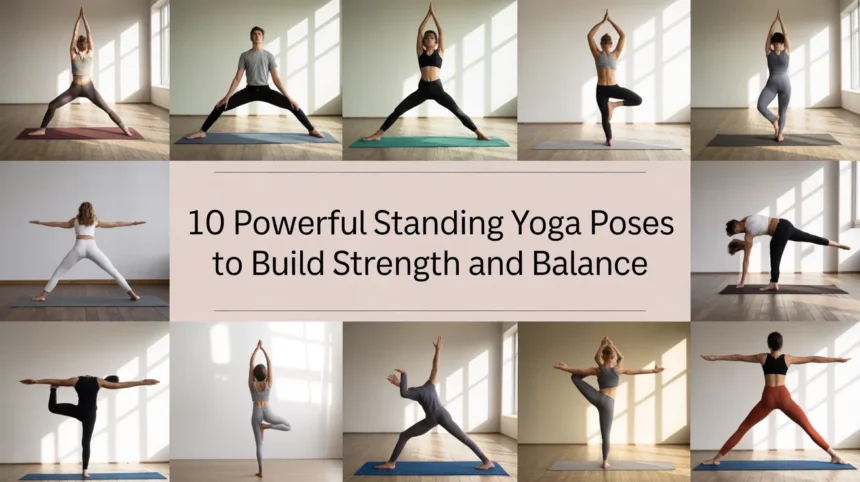
Standing yoga poses are often overlooked by beginners because they appear simple, yet they are some of the most powerful movements for building overall strength and stability. Unlike seated or floor-based poses, standing postures engage multiple muscle groups at once—your legs, glutes, core, and even your back work together to maintain balance and proper alignment. Practicing these poses regularly not only strengthens your body but also improves your posture, enhances coordination, and develops a sense of grounded stability that carries over into daily life.
- Benefits of Standing Yoga Poses
- The 10 Powerful Standing Yoga Poses
- 1. Tadasana (Mountain Pose)
- 2. Virabhadrasana I (Warrior I Pose)
- 3. Virabhadrasana II (Warrior II Pose)
- 4. Utkatasana (Chair Pose)
- 5. Trikonasana (Triangle Pose)
- 6. Vrksasana (Tree Pose)
- 7. Ardha Chandrasana (Half Moon Pose)
- 8. Parsvakonasana (Extended Side Angle Pose)
- 9. Garudasana (Eagle Pose)
- 10. Prasarita Padottanasana (Wide-Legged Forward Fold)
- Tips for Practicing Standing Yoga Safely
- Conclusion
Beyond physical benefits, standing poses cultivate focus and body awareness. Holding and transitioning through these postures teaches you how to control your movements, stabilize your joints, and improve balance—skills that are essential for injury prevention and overall functional fitness. In this article, you’ll discover 10 powerful standing yoga poses that are suitable for both beginners and experienced practitioners. Each pose comes with clear instructions, a description of its benefits, and a custom AI image prompt to help visualize the posture. By the end of this guide, you’ll have a practical understanding of how standing yoga can strengthen your body, improve your balance, and elevate your overall well-being.
Benefits of Standing Yoga Poses
Standing yoga poses offer far more than just a way to stretch or warm up—they provide a full-body workout that strengthens, stabilizes, and sharpens your mind-body connection. Here’s a closer look at the key benefits:
1. Strengthen Legs, Glutes, and Core
Standing poses actively engage your quadriceps, hamstrings, glutes, and core muscles. Whether you’re holding a strong Warrior II or balancing in Tree Pose, your lower body is constantly working to stabilize you. Over time, this builds muscle endurance, tones your legs, and strengthens your core, creating a solid foundation for other yoga poses or daily movements.
2. Improve Balance and Coordination
Balancing on one leg or maintaining stability in a deep lunge teaches your body to coordinate multiple muscle groups simultaneously. Practicing these poses regularly helps refine your proprioception—the awareness of your body in space—which enhances coordination, reduces wobbling, and improves overall control of your movements.
3. Enhance Posture and Spinal Alignment
Standing poses naturally encourage proper alignment of the spine, shoulders, and hips. By engaging the core and lengthening the spine, these poses counteract the effects of prolonged sitting, reduce slouching, and train your body to hold an upright, confident posture throughout the day.
4. Increase Endurance and Mental Focus
Holding standing poses for several breaths builds muscular endurance and stamina. At the same time, these poses require concentration and mindful breathing, which strengthens mental focus and promotes a calm, centered mindset—benefits that extend beyond the yoga mat into daily life.
5. Reduce Risk of Falls and Injuries
By strengthening stabilizing muscles and improving balance, standing yoga poses can reduce the risk of falls and common injuries, especially in older adults. Developing stability in the legs, core, and ankles makes everyday activities like walking, climbing stairs, or carrying objects safer and more controlled.
The 10 Powerful Standing Yoga Poses
Standing yoga poses build strength, stability, and focus, engaging the legs, core, and spine while improving posture and mental clarity. Below are ten essential poses, fully explained with instructions, benefits, and AI image prompts.
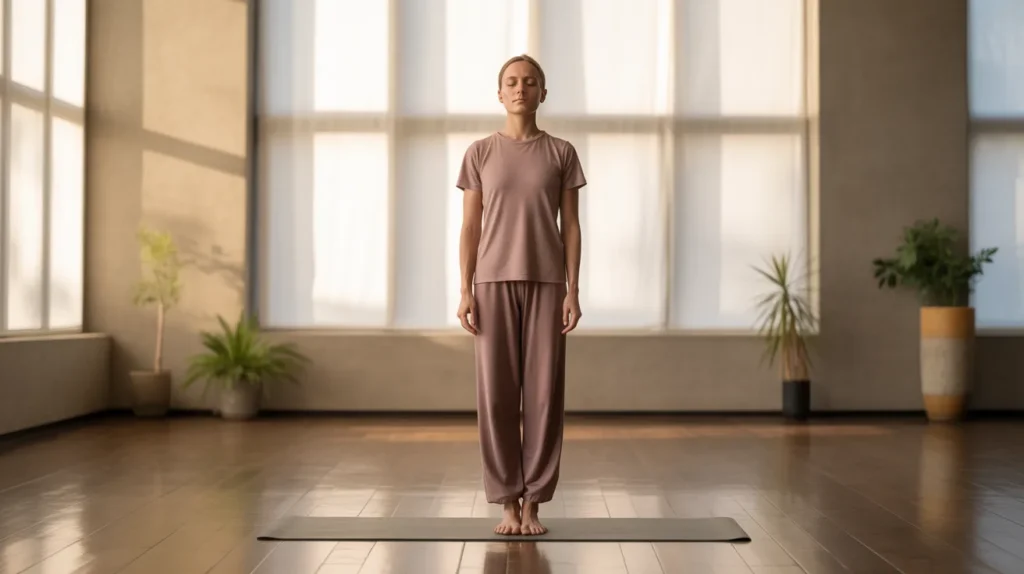
1. Tadasana (Mountain Pose)
Mountain Pose, or Tadasana, is the foundation of all standing postures. Though simple in appearance, it trains the body to align properly, strengthens the legs and core, and enhances body awareness. Standing tall with focus, you learn how to ground through your feet and lengthen your spine, which prepares you for more challenging poses.
Why it’s powerful:
Tadasana strengthens the legs, core, and back while improving posture and body alignment. It also cultivates balance and stability, setting the stage for all other standing poses.
How to practice:
- Stand with feet hip-width apart, toes pointing forward.
- Distribute weight evenly across both feet.
- Engage your thighs slightly and lift your kneecaps without locking the knees.
- Lengthen the spine and draw shoulders back and down.
- Relax arms by your sides or stretch overhead with palms facing each other.
- Keep the chin parallel to the floor and breathe deeply for 30–60 seconds.
Benefits:
- Improves posture and spinal alignment
- Strengthens legs, core, and back muscles
- Enhances balance and body awareness
2. Virabhadrasana I (Warrior I Pose)
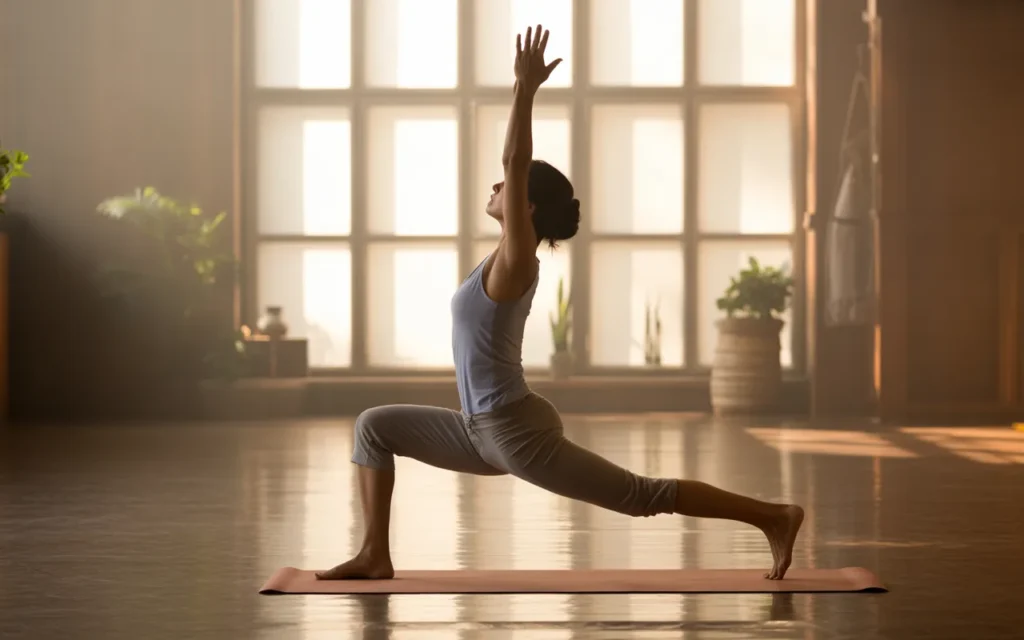
Warrior I is a grounding pose that combines strength, stability, and flexibility. It engages the legs, glutes, and core while opening the chest and hip flexors. Maintaining balance in this posture helps build mental focus and endurance.
Why it’s powerful:
This pose strengthens the thighs, calves, and glutes, opens the chest and hips, and improves body awareness and stamina. It also serves as a foundational posture for other standing sequences.
How to practice:
- Begin in Mountain Pose and step your right foot back 3–4 feet.
- Turn the back foot slightly outward and keep the front foot facing forward.
- Bend the front knee over the ankle, keeping hips squared forward.
- Extend arms overhead with palms facing each other, keeping shoulders relaxed.
- Gaze upward toward your hands or forward if more comfortable.
- Engage the core and hold for 5–8 breaths, then switch sides.
Benefits:
- Strengthens legs, glutes, and shoulders
- Opens hips and chest
- Builds balance, focus, and endurance
3. Virabhadrasana II (Warrior II Pose)
Warrior II emphasizes leg strength, hip flexibility, and endurance. It challenges balance while developing mental focus and alignment awareness. By holding a wide, grounded stance, you learn to stabilize your body and improve coordination.
Why it’s powerful:
This pose strengthens the legs, glutes, and core, opens the hips, and enhances coordination and focus. It builds stamina and prepares the body for longer standing sequences.
How to practice:
- From Mountain Pose, step one foot back and bend the front knee over the ankle.
- Turn the back foot slightly inward, keeping feet wide apart.
- Extend arms parallel to the floor, palms down, shoulders relaxed.
- Align shoulders over hips and gaze steadily over the front hand.
- Engage the core and press evenly through both feet.
- Hold for 5–8 breaths, then repeat on the opposite side.
Benefits:
- Strengthens legs, glutes, and core
- Opens hips and chest
- Improves balance and coordination
- Enhances mental focus and stamina
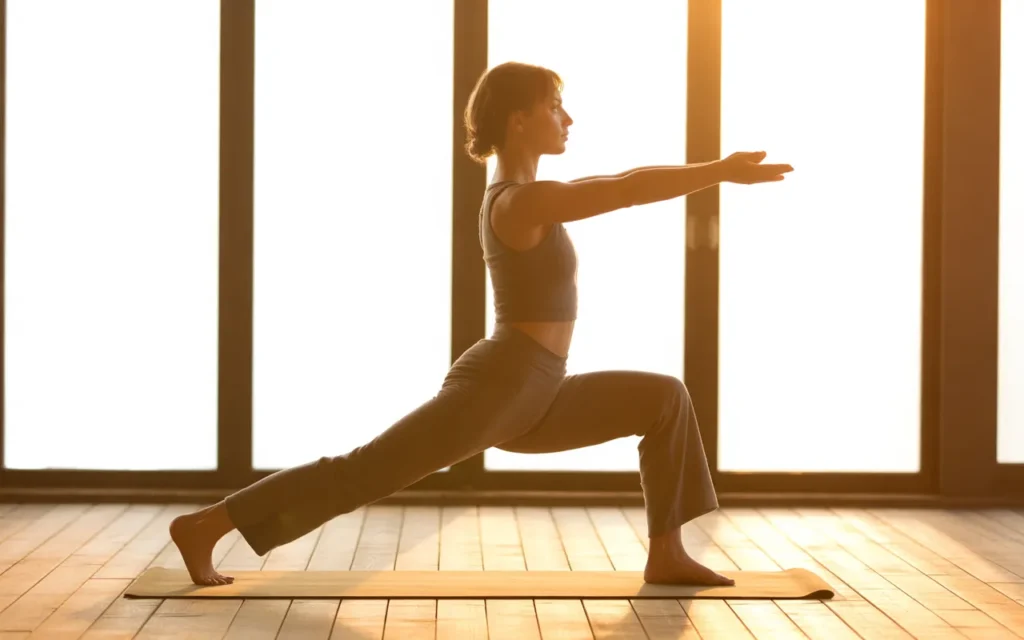
4. Utkatasana (Chair Pose)
Chair Pose resembles sitting into an imaginary chair. It strengthens the thighs, glutes, and core while improving endurance and balance. Maintaining the pose requires focus, grounding through the heels, and deep breathing.
Why it’s powerful:
Utkatasana builds lower-body strength, stabilizes the ankles and core, and enhances focus and endurance. It is particularly effective for preparing the body for dynamic standing sequences.
How to practice:
- Start in Mountain Pose with feet together or hip-width apart.
- Bend your knees and sink your hips as if sitting into a chair.
- Keep the spine long and chest lifted.
- Raise arms overhead, palms facing each other.
- Engage the core and keep weight evenly distributed through the heels.
- Hold for 5–10 breaths, then release.
Benefits:
- Strengthens thighs, glutes, and core
- Improves balance and ankle stability
- Builds endurance and focus
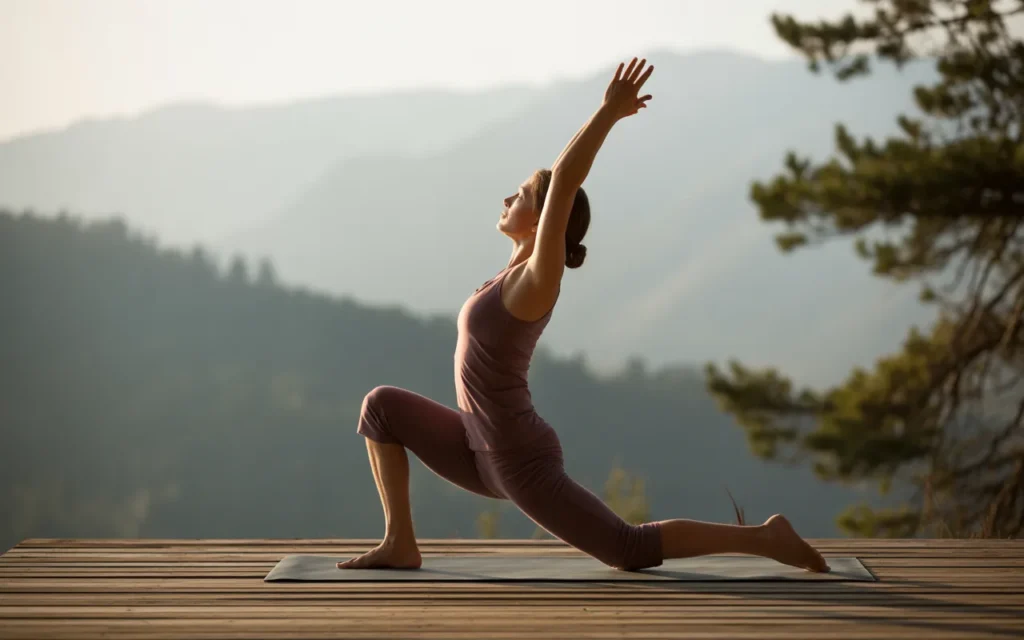
5. Trikonasana (Triangle Pose)
Triangle Pose combines stretching and strengthening, improving flexibility in the legs, spine, and hips. It engages the core and encourages proper alignment while maintaining balance.
Why it’s powerful:
Trikonasana strengthens the legs, stretches the hamstrings and hips, improves posture, and enhances coordination and focus. It also helps release tension in the spine.
How to practice:
- Stand with feet wide apart, front foot facing forward, back foot slightly angled in.
- Extend arms to the sides and hinge forward over the front leg.
- Place the front hand on your shin, ankle, or floor while extending the opposite arm overhead.
- Keep the chest open and gaze toward the top hand.
- Engage the core and hold for 5–8 breaths, then switch sides.
Benefits:
- Strengthens legs and core
- Improves flexibility and posture
- Enhances balance and coordination
- Opens hips and spine
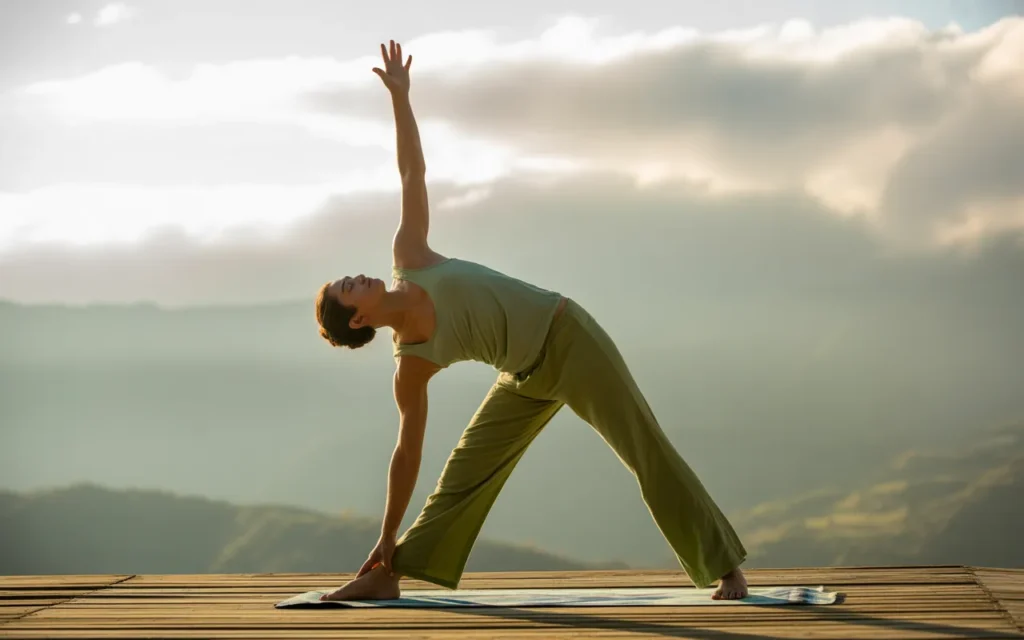
6. Vrksasana (Tree Pose)
Tree Pose is a classic balancing posture that strengthens the ankles, legs, and core while cultivating focus and stability. Standing on one leg improves concentration and body awareness.
Why it’s powerful:
Vrksasana develops ankle and leg strength, improves balance, and enhances mental focus. It also encourages grounding and body alignment.
How to practice:
- Start in Mountain Pose and shift weight onto one foot.
- Place the sole of the opposite foot on the inner thigh or calf (avoid the knee).
- Bring hands together at the chest or extend overhead.
- Focus on a steady gaze and engage the core.
- Hold for 5–8 breaths, then switch sides.
Benefits:
- Strengthens legs, ankles, and core
- Improves balance and focus
- Enhances body awareness and posture
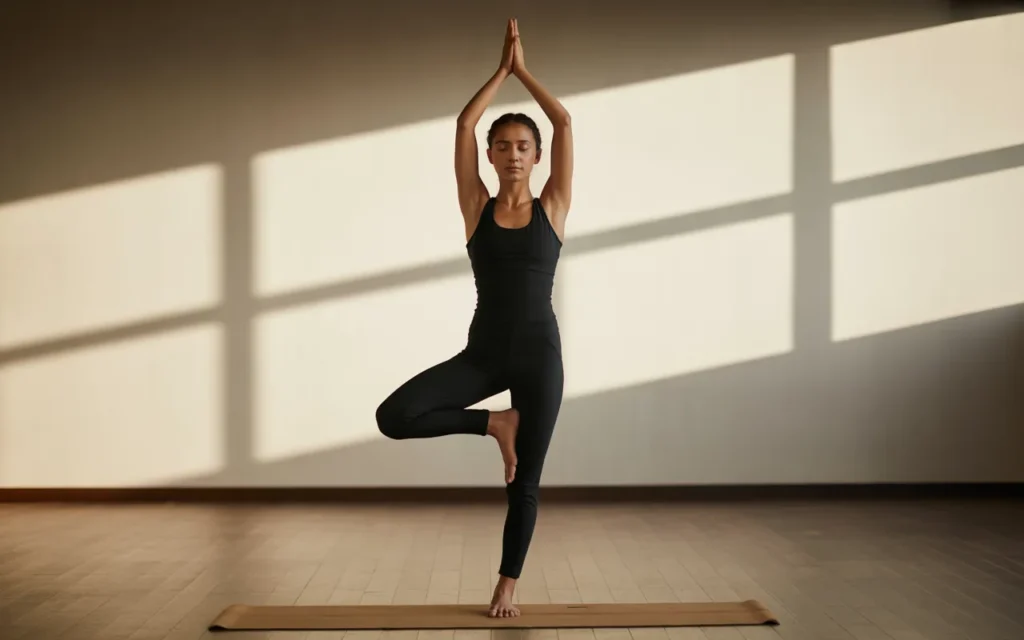
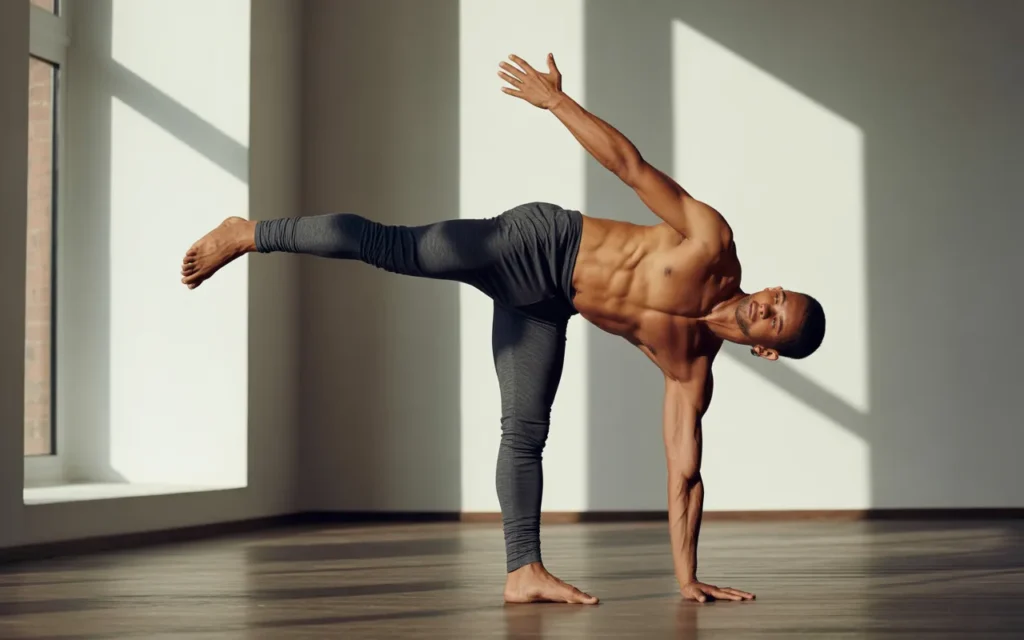
7. Ardha Chandrasana (Half Moon Pose)
Half Moon Pose is a challenging balancing posture that stretches the hamstrings, strengthens the glutes and core, and improves coordination. It requires focus to stabilize the lifted leg while opening the chest.
Why it’s powerful:
This pose develops single-leg stability, strengthens the lower body and core, and enhances mental concentration and coordination.
How to practice:
- Begin in Triangle Pose.
- Shift weight onto the front foot and front hand.
- Lift the back leg parallel to the floor.
- Extend the top arm upward and open the chest.
- Maintain a steady gaze and hold for 5–8 breaths, then switch sides.
Benefits:
- Strengthens glutes, hamstrings, and core
- Improves balance and coordination
- Enhances focus and body awareness
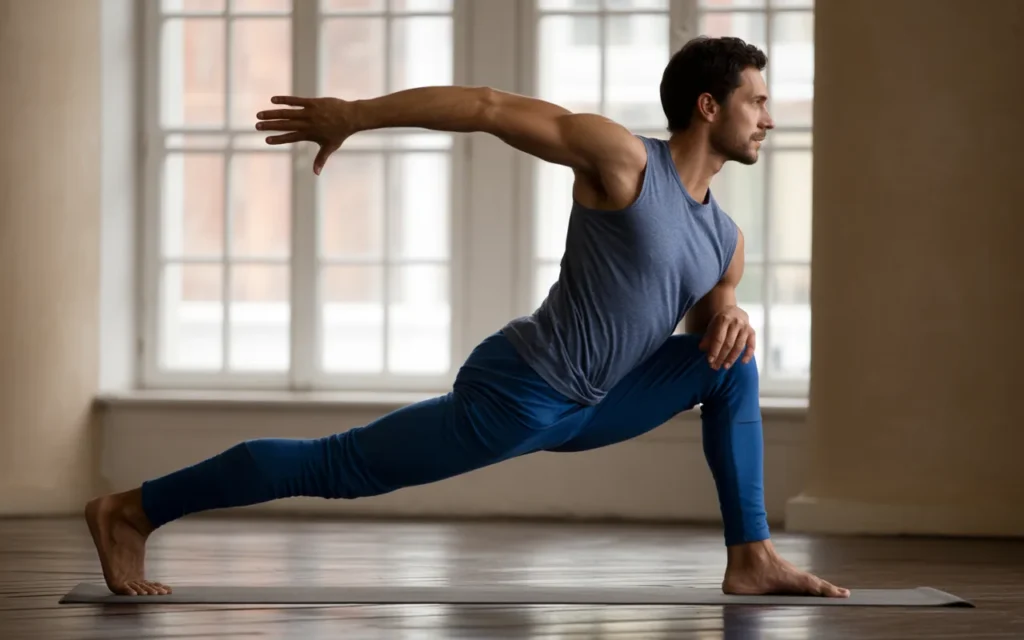
8. Parsvakonasana (Extended Side Angle Pose)
Extended Side Angle stretches the side body while strengthening the legs and core. It also develops stamina and alignment awareness.
Why it’s powerful:
This pose strengthens the thighs, calves, and core while improving flexibility in the spine and hips. It also enhances balance and endurance.
How to practice:
- From Warrior II, bend the front knee over the ankle.
- Lower the front arm to the floor or a block next to the front foot.
- Extend the opposite arm over the ear, creating a long diagonal line.
- Engage the core and hold for 5–8 breaths, then switch sides.
Benefits:
- Strengthens legs and core
- Improves flexibility in spine and hips
- Enhances balance and endurance
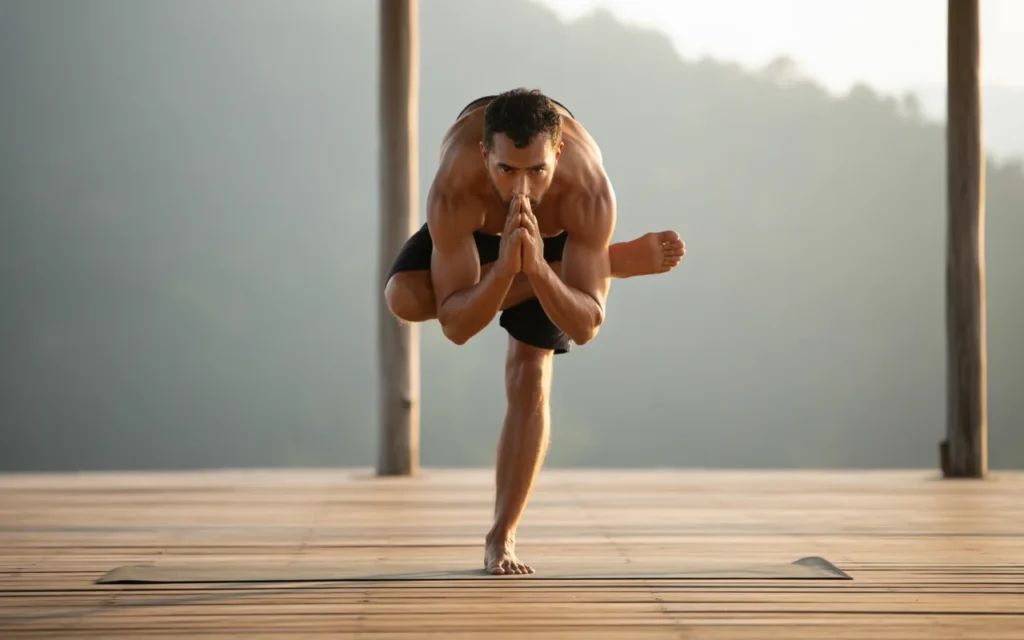
9. Garudasana (Eagle Pose)
Eagle Pose wraps the arms and legs, requiring concentration and balance. It strengthens the ankles, legs, and core while improving focus.
Why it’s powerful:
Garudasana enhances stability, coordination, and mental concentration. It strengthens the lower body and develops joint mobility.
How to practice:
- Start in Mountain Pose. Bend knees slightly and cross one leg over the other, hooking the foot behind the calf if possible.
- Wrap the opposite arm under and around the other, bringing palms together.
- Focus on a steady gaze and engage the core.
- Hold for 5–8 breaths, then switch sides.
Benefits:
- Strengthens ankles, legs, and core
- Improves balance and coordination
- Enhances focus and concentration
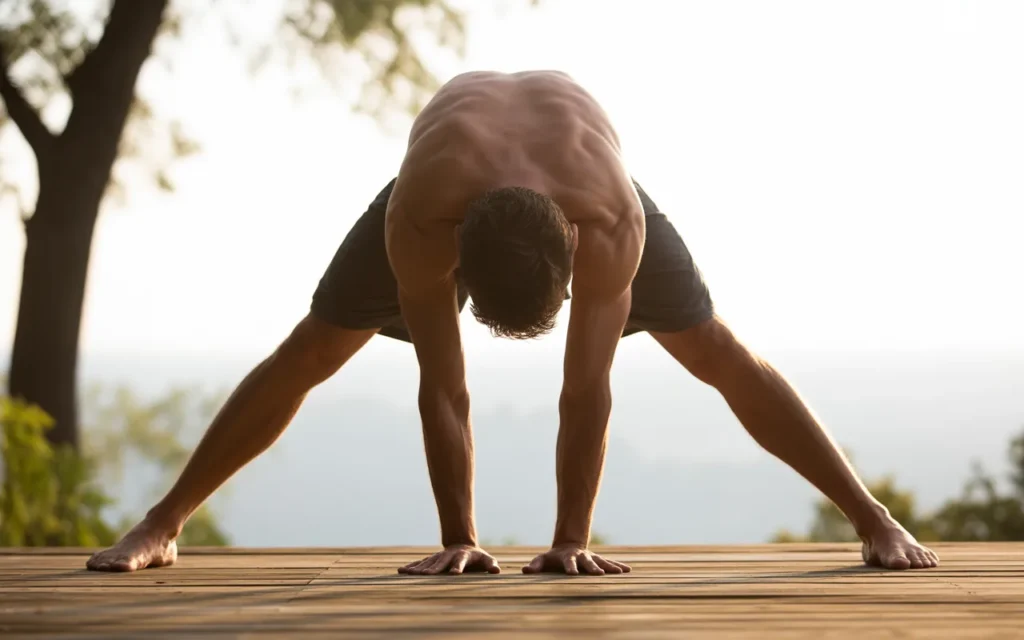
10. Prasarita Padottanasana (Wide-Legged Forward Fold)
Wide-Legged Forward Fold stretches the hamstrings, strengthens the legs, and calms the nervous system. It requires engagement of the legs while lengthening the spine.
Why it’s powerful:
This pose strengthens the legs and inner thighs while improving flexibility in the hamstrings and spine. It also promotes balance and has a calming effect on the mind.
How to practice:
- Stand with feet wide apart.
- Hinge at the hips and fold forward, keeping the spine long.
- Place hands on the floor, a block, or clasp behind the back.
- Engage the legs for stability and hold for 5–8 breaths.
Benefits:
- Strengthens legs and inner thighs
- Improves flexibility in hamstrings and spine
- Enhances balance and calms the mind
Tips for Practicing Standing Yoga Safely
Practicing standing yoga poses safely is essential to maximize benefits while minimizing the risk of injury. Here are some important tips to keep in mind:
Warm up before starting: Standing poses engage multiple muscle groups, so it’s important to prepare your body. Gentle stretches, ankle rolls, hip circles, or a few minutes of light movement can loosen tight muscles and increase blood flow. Warming up helps prevent strains and allows you to move more freely into deeper postures.
Engage your core and legs in every pose: Many injuries in standing postures occur when the lower body and core are not properly activated. By engaging your thighs, glutes, and abdominal muscles, you create a stable foundation, support your spine, and maintain balance. This engagement also ensures each pose strengthens the correct muscles.
Focus on steady breathing: Breath control is just as important as physical alignment. Maintain slow, deep, and even breaths in each pose. Proper breathing helps you stay centered, supports stability, and reduces tension in the muscles. It also enhances mental focus, which is crucial when balancing or holding poses for longer periods.
Use props if needed: Yoga blocks, straps, or a wall can provide extra support, especially if you’re new to standing postures. Props help maintain correct alignment, make poses more accessible, and prevent overstretching or strain. Don’t hesitate to modify poses to suit your current flexibility and strength.
Practice consistently for best results: Like any form of exercise, consistency is key. Practicing standing yoga regularly, even for 10–15 minutes a day, gradually builds strength, improves balance, and increases endurance. Over time, your body will become more stable, flexible, and confident in each pose.
Conclusion
Standing yoga poses are a powerful tool for building strength, enhancing balance, and developing mental focus. By practicing poses such as Mountain, Warrior, Chair, and Tree regularly, you engage multiple muscle groups, improve posture, and cultivate a grounded sense of body awareness. These postures are not only physically strengthening but also mentally centering, offering a full-body workout that supports overall wellness.
Incorporating a few standing poses into your daily routine can make a significant difference over time. Start with a short sequence, focusing on proper alignment, breath, and engagement, and gradually expand as your strength and balance improve. Whether you are a beginner or an experienced practitioner, standing yoga can help you build a foundation of stability, endurance, and mindfulness.
Try integrating a standing yoga routine into your morning or evening practice, and notice how consistent practice improves your posture, strength, and confidence. Share your experience with friends or a yoga community, and inspire others to embrace the benefits of standing poses.