
Gomukhasana, commonly known as Cow Face Pose, is a classic yoga posture that offers a deep stretch for your hips and shoulders. If you spend a lot of time sitting or feel tightness in your upper body, this pose can help release tension, improve posture, and create a sense of calm in both body and mind.
In Sanskrit, “Gomukhasana” translates to “Cow Face Pose”, inspired by the shape your arms and legs make in the final posture, resembling the face of a cow. Traditionally, it has been practiced to increase flexibility, open the chest and shoulders, and relieve stress.
Whether you are new to yoga or looking to deepen your practice, this guide will show you how to perform Gomukhasana safely, step by step, with easy modifications, tips for proper alignment, and ways to make the pose more comfortable for beginners.
What is Gomukhasana?
Gomukhasana is a seated posture that combines a deep hip stretch with an intense shoulder opener. By crossing the legs and stacking the knees, it stretches the hips and thighs, while the arms reach behind the back, stretching the shoulders, chest, and triceps.
Origins and relevance: This pose has roots in classical Hatha Yoga, where it has long been valued for improving flexibility, promoting relaxation, and balancing energy flow in the body. It is often included in sequences that focus on hip openers, shoulder stretches, or restorative practices.
Key areas targeted:
- Hips: Opens tight hip flexors and glutes
- Shoulders & Arms: Releases tension in the shoulders, triceps, and chest
- Spine & Posture: Encourages upright alignment and spinal lengthening
With consistent practice, Gomukhasana not only enhances flexibility but also calms the mind, making it an ideal pose for both physical and mental well-being.
Benefits of Gomukhasana
Gomukhasana is more than just a stretch — it’s a full-body pose that brings benefits on multiple levels: physical, mental, and therapeutic. Let’s explore what this pose can do for your body and mind.
Physical Benefits of Gomukhasana
Gomukhasana is a powerful physical stretch that targets multiple areas of the body.
- Opens Hips and Shoulders: The crossed-leg position stretches your glutes, hip flexors, and outer thighs, while the arms reaching behind the back release tightness in the shoulders and chest.
- Improves Posture: Sitting upright with a straight spine strengthens postural muscles, helping you maintain proper alignment in daily activities.
- Increases Upper Body Flexibility: Regular practice gradually improves mobility in the shoulders, arms, and upper back, making other yoga poses and everyday movements easier.
By incorporating this pose into your routine, you can enhance overall physical flexibility and reduce muscular tension.
Mental & Wellness Benefits of Gomukhasana
Gomukhasana is not only physical — it also provides mental and emotional benefits:
- Promotes Relaxation: Focusing on your breath while holding the pose calms the nervous system, allowing your mind and body to relax.
- Reduces Stress and Tension: The combination of gentle stretching and mindful breathing helps release built-up tension in the body, reducing mental stress and promoting mindfulness.
- Encourages Mind-Body Awareness: Practicing Gomukhasana helps you connect with your body, notice areas of tightness, and cultivate a sense of inner calm.
This makes Gomukhasana an ideal pose for winding down after a busy day or incorporating into a restorative yoga practice.
Therapeutic Applications of Gomukhasana
Gomukhasana can also serve a therapeutic role for specific physical conditions or daily stiffness:
- Relieves Shoulder and Hip Stiffness: Perfect for people who sit for long periods, it improves circulation and eases tension in commonly tight areas.
- Supports Recovery and Rehabilitation: With the use of props like yoga straps or blocks, this pose can be adapted for safe stretching, making it useful for gentle therapy and restorative sequences.
- Enhances Overall Body Balance: By opening key areas and releasing tension, Gomukhasana helps maintain body balance, supporting long-term mobility and flexibility.
Therapeutically, this pose is a gentle yet effective way to improve comfort, reduce stiffness, and support physical health over time.
Step-by-Step Guide for Beginners
Gomukhasana, or Cow Face Pose, may seem challenging at first, but with careful guidance and proper technique, beginners can safely enjoy its full benefits. This step-by-step guide will walk you through the pose, including preparation, alignment, and tips to avoid common mistakes.
Preparation
Before attempting Gomukhasana, it’s essential to prepare your body and gather a few props to make the pose more accessible. A yoga strap or belt can help if your hands cannot meet behind your back, while a yoga block or folded blanket provides support under the hips, allowing for more comfort and stability. Gentle warm-up stretches for the shoulders and hips, such as Cat-Cow, Shoulder Rolls, or Seated Forward Fold, help loosen tight muscles and reduce the risk of strain. Spending a few minutes on these preparatory steps will make your practice safer and more effective.
Step 1: Sit Cross-Legged with Spine Straight
Start seated on the floor, keeping your spine tall and shoulders relaxed. If your hips feel tight, sit on a folded blanket or block to elevate the hips slightly. The goal is to create a stable, balanced foundation while maintaining an upright posture. Sitting tall ensures that the stretch in your hips and shoulders is effective, and it also helps you maintain proper alignment throughout the pose.
Step 2: Stack the Knees
Cross your legs so that your knees are stacked, with one knee resting directly over the other. For example, place your right knee on top of the left knee. This stacking deepens the stretch in the hips and outer thighs, targeting areas that often feel tight from sitting or prolonged activity. Make sure both sitting bones remain grounded and balanced to maintain stability in the pose.
Step 3: Position the Arms
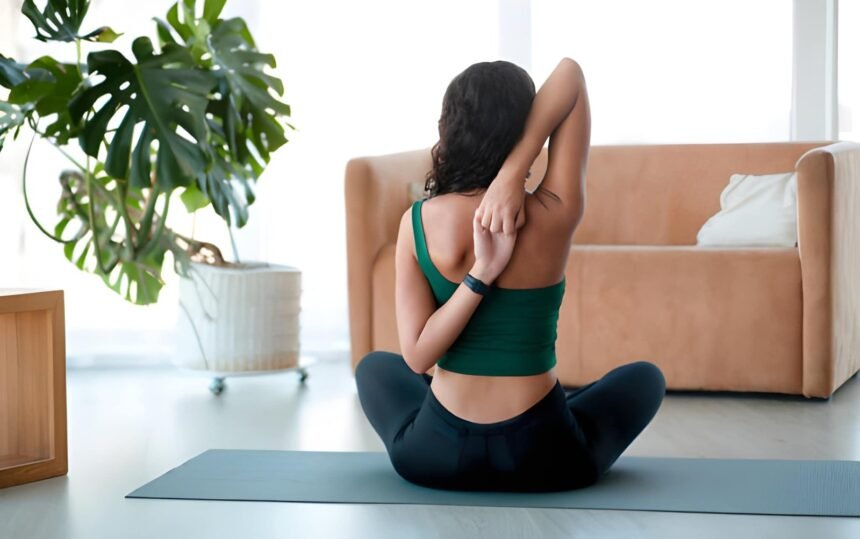
Once your legs are stacked, raise one arm straight up alongside your ear. Bend the elbow so that your hand reaches down behind your back. Bring the other arm up from below, attempting to clasp your hands behind your back. If your hands cannot reach each other, use a yoga strap or belt to bridge the gap, holding it between your hands. This arm position stretches the shoulders, chest, and triceps, improving upper-body flexibility while promoting a gentle opening in the chest.
Step 4: Hold the Pose
Hold Gomukhasana for 20–30 seconds (or longer if comfortable), focusing on steady, mindful breathing. Keep your spine tall and shoulders relaxed as you maintain the posture. Use each inhale to lengthen the spine and each exhale to deepen the stretch slightly, without forcing your body. Holding the pose with awareness helps release tension in both the hips and shoulders, while also calming the nervous system.
Step 5: Switch Sides
After holding the pose on one side, gently release your arms and legs and switch sides. Stack the opposite knee on top and reverse the arm positions. Practicing both sides equally ensures balanced flexibility and prevents one side from becoming tighter than the other. Taking a moment between sides to reset your posture and breathe deeply helps maintain stability and mindfulness throughout the practice.
Tips for Proper Alignment
Maintaining correct alignment is key to getting the most out of Gomukhasana and preventing injury. Keep your spine upright and avoid hunching forward. Relax your shoulders and chest — do not force the arms to meet behind your back. Engage your core slightly to support your lower back, and focus on smooth, even breathing throughout the pose. Proper alignment allows the stretch to target the intended muscles effectively while supporting overall body balance.
Common Mistakes to Avoid
Beginners often make mistakes that can reduce the effectiveness of the pose or cause discomfort. Avoid collapsing the chest or rounding the back, which compromises posture and can strain the spine. Never force your hands to clasp; always use a yoga strap if needed. Ensure that your hips remain level and that both sitting bones stay grounded. Finally, avoid holding your breath — steady, mindful breathing is crucial for maximizing the benefits of Gomukhasana.
Modifications & Props
Gomukhasana can be adapted in several ways to make it more accessible, especially for beginners or anyone with tight shoulders or hips.
- Using a Yoga Strap: If your hands cannot reach each other behind your back, a yoga strap or belt can bridge the gap. Hold the strap with both hands, keeping the arms straight but comfortable. This allows you to enjoy the shoulder stretch safely without straining.
- Sitting on a Block or Folded Blanket: Elevating your hips slightly with a block or folded blanket can reduce pressure on the knees and hips, making it easier to stack your knees correctly. This modification is particularly helpful for those with tight hips or limited flexibility.
- Arm and Shoulder Variations: If you feel discomfort in the shoulders, you can modify the arm position by keeping the top arm slightly bent or the bottom hand resting on your lower back instead of clasping. Over time, flexibility will improve, and you can gradually work toward the full pose.
By using props and variations, Gomukhasana can be practiced comfortably and safely, ensuring that beginners gain the benefits without strain.
When to Practice Gomukhasana
Timing your practice can enhance the effectiveness of Gomukhasana.
- Best Time During a Yoga Session: This pose works well either during the middle or end of your session. As a deep hip and shoulder opener, it’s ideal after warming up the body, but it can also be used in the cool-down phase to release tension and calm the mind.
- Frequency for Beginners: Start with 2–3 times per week, holding the pose for 20–30 seconds on each side. As your flexibility improves, you can increase both duration and frequency.
- Integration Into Daily Practice: Gomukhasana can be incorporated into daily routines as a standalone stretch, part of a hip-opening sequence, or included in a restorative session before meditation. Regular practice helps improve posture, flexibility, and stress relief over time.
Precautions & Contraindications
While Gomukhasana is generally safe for most people, it’s important to practice mindfully.
- Avoid if Injured: If you have recent or chronic injuries in the shoulders, knees, or hips, skip this pose or consult a qualified instructor before attempting it.
- Guidance for Beginners: Don’t force your knees or hands to reach; use props to support your body. Maintain an upright spine and avoid straining your muscles.
- Safety Tips for Gradual Progress: Always start slowly, holding the pose for shorter durations at first. Gradually increase your hold time and intensity as your flexibility and comfort improve. Listening to your body is essential to prevent injury and get the maximum benefit from the pose.
Conclusion
Gomukhasana, or Cow Face Pose, is a versatile yoga posture that can improve flexibility, open tight hips and shoulders, support posture, and calm the mind. Even beginners can enjoy its benefits by using simple modifications and props.
With consistent practice and mindful alignment, Gomukhasana can become a valuable part of your daily yoga routine, helping you feel more flexible, relaxed, and centered.
Try practicing Gomukhasana today, even for just a few breaths on each side. Explore related poses that complement hip and shoulder flexibility, and gradually build a routine that supports your body and mind.