
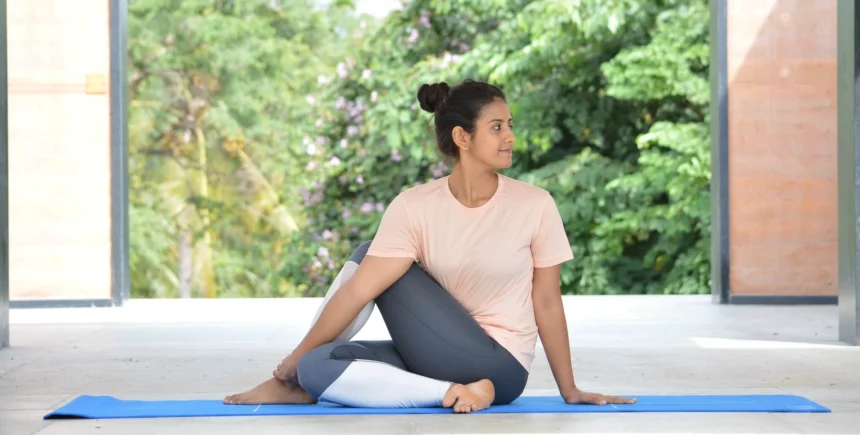
Ardha Matsyendrasana, also known as Half Lord of the Fishes Pose, is a foundational seated spinal twist deeply rooted in classical yoga traditions. The pose is named after the sage Matsyendra, a revered yogi in ancient teachings, and it symbolizes transformation, renewal, and inner awakening. Practiced widely in Hatha Yoga, this asana is valued for its balanced combination of strength, mobility, and therapeutic benefits.
- What Is Ardha Matsyendrasana?
- Key Benefits of Ardha Matsyendrasana
- Improves Spine Flexibility
- Long-Term Spinal Benefits
- Stimulates Digestion Naturally
- Detoxifies the Body
- Relieves Back and Hip Tension
- Improves Posture
- How to Do Ardha Matsyendrasana (Step-by-Step)
- Step 1: Starting Position
- Step 2: Bend One Knee
- Step 3: Fold the Other Leg
- Step 4: Twist
- Step 5: Arm Placement
- Step 6: Hold & Breathe
- Breathing Tips for Maximum Benefit
- Common Mistakes to Avoid
- Modifications for Beginners
- Who Should Avoid or Modify This Pose?
- When to Practice Ardha Matsyendrasana
- Ardha Matsyendrasana and Mind-Body Balance
- Final Thoughts
Unlike fast-paced or highly dynamic postures, Ardha Matsyendrasana focuses on mindful rotation of the spine while maintaining length and stability. The twisting motion gently mobilizes each vertebra, helping restore natural movement patterns that are often lost due to modern sedentary lifestyles. At the same time, the compression and release action around the abdomen stimulates internal organs, encouraging better circulation and digestive efficiency. Because of this dual action—external flexibility and internal activation—it is considered one of the most holistic seated poses in yoga practice.
If you’re searching for a natural way to improve spine flexibility, support healthy digestion, and reduce stiffness caused by prolonged sitting, this pose can be a powerful addition to your routine. Long hours at a desk, driving, or using digital devices often lead to tight hips, rounded shoulders, and restricted spinal movement. Ardha Matsyendrasana counteracts these effects by lengthening the spine, opening the chest, and restoring rotational mobility.
Beyond physical benefits, this pose also promotes overall vitality. Twisting movements are known to refresh the nervous system, enhance breathing capacity, and improve posture awareness. When practiced consistently and with proper alignment, Ardha Matsyendrasana can help you feel lighter, more energized, and more balanced—both physically and mentally.
What Is Ardha Matsyendrasana?
Ardha Matsyendrasana is a classical seated twisting posture traditionally practiced in Hatha Yoga. It combines spinal rotation, hip engagement, and mindful breathing into one integrated movement.
The name comes from Sanskrit:
- Ardha = Half
- Matsyendra = A legendary yogi and spiritual teacher
- Asana = Pose
The full version of this posture (Matsyendrasana) is a deeper spinal twist. Ardha Matsyendrasana is the more accessible “half” variation, making it suitable for most practitioners, including beginners with proper guidance.
At its core, this pose is a seated spinal twist that gently rotates the spine from the base upward. When performed correctly, you lengthen the spine on each inhale and deepen the twist on each exhale. This creates a wringing action through the torso — almost like a soft squeeze — that stimulates circulation, activates abdominal organs, and restores mobility to stiff areas of the back.
Unlike passive stretches, this posture requires active engagement. You sit tall, ground through your hips, and rotate with control. This balance of stability and mobility is what makes Ardha Matsyendrasana both strengthening and therapeutic.
Key Benefits of Ardha Matsyendrasana
Ardha Matsyendrasana, or the Half Lord of the Fishes Pose, offers a wide range of physical and mental benefits that make it a valuable addition to any yoga practice.
Improves Spine Flexibility
Spinal health depends on movement in all directions — forward bending, backward bending, side bending, and rotation. Many daily activities involve limited rotation, which can cause stiffness in the vertebrae over time.
Ardha Matsyendrasana specifically:
- Increases rotational flexibility of the spine
- Mobilizes the thoracic (mid-back) region
- Reduces stiffness in the lower back
- Encourages even spacing between vertebrae
- Counteracts the effects of prolonged sitting
Because the twist begins at the base of the spine and travels upward, it promotes balanced mobility rather than forcing movement into one area.
Long-Term Spinal Benefits
With consistent practice, you may notice:
- Reduced mild back discomfort
- Improved upright posture
- Greater ease in daily movements
- Increased body awareness and spinal control
Over time, better spinal mobility supports healthier posture, deeper breathing, and less muscular tension.
Stimulates Digestion Naturally
One of the most appreciated benefits of Ardha Matsyendrasana is its positive effect on digestion.
The twisting motion creates alternating compression and release in the abdominal region. This action:
- Gently massages digestive organs
- Stimulates the liver and kidneys
- Supports intestinal movement
- Encourages healthy bowel function
- Reduces bloating and sluggish digestion
When you twist, the abdominal organs are compressed. When you release, fresh blood flow returns to the area. This process enhances circulation and may support more efficient digestive processes.
Many practitioners include this pose in routines focused on:
- Gut health
- Detox support
- Reducing post-meal heaviness
- Improving metabolic balance
It’s a natural, movement-based way to stimulate digestion without strain or harsh intervention.
Detoxifies the Body
Twisting poses are often referred to as “detox poses.” While the body naturally detoxifies through organs like the liver, kidneys, and lymphatic system, movement can help optimize these processes.
Ardha Matsyendrasana supports detoxification by:
- Improving blood circulation
- Encouraging lymphatic flow
- Releasing internal compression
- Enhancing oxygen delivery through improved breathing
The twist acts like a gentle internal rinse cycle. As you compress and release the abdominal region, circulation improves, which supports the body’s natural cleansing systems.
Think of it not as forced detoxification, but as assisting your body’s existing detox pathways through mindful movement.
Relieves Back and Hip Tension
Modern lifestyles often create tight hips and lower back tension due to prolonged sitting and limited movement variety.
Ardha Matsyendrasana stretches and activates:
- Glute muscles
- Outer hips
- Lower back
- Obliques
- Shoulders and upper back
Because the pose integrates both spinal rotation and hip positioning, it targets multiple tension areas simultaneously.
This makes it especially beneficial for:
- Desk workers
- Drivers
- Students
- People with sedentary routines
- Anyone experiencing hip tightness
Regular practice can restore balance between the hips and spine, which often reduces strain in the lower back.
Improves Posture
Good posture is not just about standing straight — it’s about spinal balance, core engagement, and muscular awareness.
Ardha Matsyendrasana helps improve posture by:
- Strengthening deep spinal muscles
- Activating core stabilizers
- Opening the chest and shoulders
- Promoting even spinal alignment
When you sit tall in this pose, you train your body to maintain an elongated spine rather than collapsing forward. Over time, this awareness carries into daily activities like sitting, walking, and working at a desk.
Better posture can also:
- Reduce neck and shoulder strain
- Improve breathing efficiency
- Enhance confidence and body presence
How to Do Ardha Matsyendrasana (Step-by-Step)
Ardha Matsyendrasana, or Half Lord of the Fishes Pose, is a seated spinal twist that requires mindful alignment and controlled movement. Here’s a detailed guide to practicing it safely and effectively:
Step 1: Starting Position
Begin by sitting on the floor with both legs extended straight in front of you. Keep your spine tall, shoulders relaxed, and core gently engaged. This foundational posture sets the stage for proper alignment throughout the twist.
Step 2: Bend One Knee
Bend your right knee and place your right foot on the floor outside your left thigh. Make sure the foot is flat and the knee points upward. This leg positioning allows the torso to rotate without straining the lower back or hips.
Step 3: Fold the Other Leg
For a deeper twist, bend your left leg and bring the heel toward your right hip. Beginners may keep the left leg extended or slightly bent for comfort. The goal is to maintain a stable base while enabling a gentle rotation.
Step 4: Twist
Inhale deeply to lengthen the spine, creating space between the vertebrae. Exhale slowly as you rotate your torso to the right, keeping the spine long and the chest open. Move with control rather than forcing the twist, allowing the rotation to come naturally from your mid-back.
Step 5: Arm Placement
Place your left elbow on the outside of your right knee to gently deepen the twist, and bring your right hand behind you on the floor for support. This arm positioning helps maintain stability while enhancing spinal rotation.
Step 6: Hold & Breathe
Hold the pose for 20–30 seconds, breathing slowly and evenly. Focus on elongating the spine with each inhale and deepening the twist with each exhale. Release the pose gently and repeat on the opposite side for balanced benefits.
Breathing Tips for Maximum Benefit
Proper breathing is key to unlocking the full benefits of Ardha Matsyendrasana:
- Inhale deeply: Sit tall and lengthen your spine, creating space between your vertebrae.
- Exhale slowly: Gently rotate into the twist, allowing your torso to move naturally without forcing it.
- Do not hold your breath: Holding the breath creates tension and limits both spinal mobility and abdominal stimulation.
When done correctly, mindful breathing enhances spinal decompression, improves circulation, supports digestion, and helps you feel grounded and energized throughout the pose.
Common Mistakes to Avoid
To practice safely and effectively, watch out for these common errors:
Rounding the back: Shortens the spine and reduces the stretch.
Forcing the twist: Can strain muscles and joints, leading to discomfort or injury.
Collapsing the chest: Limits breathing and core engagement, reducing overall effectiveness.
Holding the breath: Increases tension and decreases relaxation.
Tip: Always prioritize length over rotation. Start by sitting tall, breathe deeply, and then twist slowly. Controlled, mindful movement ensures maximum benefit and protects your spine.
Modifications for Beginners
Ardha Matsyendrasana can be adapted to suit all levels, especially if you are new to yoga or have tight hips and shoulders. Some beginner-friendly modifications include:
- Keep the bottom leg straight: Instead of folding both legs, leave the bottom leg extended to reduce strain on the hips and lower back.
- Hug the knee instead of hooking the elbow: Place your arm around the bent knee rather than pressing against it. This allows a gentler twist while maintaining stability.
- Sit on a folded blanket: Elevating the hips slightly helps align the spine and makes the twist more accessible, particularly for those with tight hamstrings or lower back stiffness.
These adjustments allow you to experience the benefits of the pose safely, while gradually building flexibility and strength.
Who Should Avoid or Modify This Pose?
While Ardha Matsyendrasana is generally safe, certain conditions require caution or professional guidance:
- Severe spinal injuries – Twisting may exacerbate instability or pain.
- Recent abdominal surgery – Avoid twisting the torso until fully healed.
- Herniated disc – Deep twists may increase pressure on spinal discs.
- Pregnancy – Deep twists should be avoided; mild modifications may be possible under guidance.
Always listen to your body and avoid forcing the twist if you experience discomfort or pain.
When to Practice Ardha Matsyendrasana
For best results, incorporate this pose into your routine at optimal times:
- After a light warm-up: Prepares the spine and muscles for twisting.
- After meals (wait 2–3 hours): Prevents discomfort while stimulating digestion safely.
- During evening relaxation routines: Helps release tension accumulated throughout the day.
This pose pairs well with complementary postures such as:
- Forward folds for spinal elongation
- Gentle backbends to balance the twist
- Relaxation poses to integrate body and breath
How Often Should You Practice?
To experience the full benefits of Ardha Matsyendrasana:
- Practice 3–4 times per week for noticeable results.
- Hold each side for 20–40 seconds, focusing on lengthening the spine and controlled breathing.
- Perform 2–3 rounds per side for balanced flexibility and strength.
Remember: consistency matters more than intensity. It’s better to practice mindfully for shorter periods than to force long or deep twists sporadically.
Ardha Matsyendrasana and Mind-Body Balance
While Ardha Matsyendrasana is widely celebrated for its physical benefits, it also has profound effects on the mind and emotional well-being. The pose encourages mindful awareness as you lengthen and twist your spine, which can help quiet mental chatter and bring focus to the present moment. Practicing this posture regularly can enhance:
- Mental Clarity: The combination of breath, alignment, and rotation helps sharpen concentration and release tension from the nervous system.
- Focus: Twisting poses require deliberate movement, engaging both body and mind, which can improve overall mental alertness.
- Emotional Balance: The gentle wringing motion of the spine mirrors the idea of “letting go,” symbolically releasing stress, frustration, and built-up tension.
Because of its mind-body connection, Ardha Matsyendrasana is not just a physical stretch—it becomes a meditative practice that promotes calm, centered energy, making it a powerful tool for stress relief and emotional resilience.
Final Thoughts
Ardha Matsyendrasana is a deceptively simple pose with transformative benefits for both the body and mind. By incorporating this seated twist into your yoga practice, you can naturally improve spine flexibility, support digestion, and release tension in the back, hips, and shoulders.
With consistent and mindful practice, you can expect to:
- Increase spinal mobility and maintain healthy vertebral function
- Support digestive health through gentle abdominal massage
- Reduce stiffness from prolonged sitting or daily tension
- Improve posture and strengthen core engagement
- Enhance overall vitality, energy, and mind-body awareness
This classic seated twist is easy to integrate into any routine—morning, evening, or as part of a full yoga flow. By practicing Ardha Matsyendrasana regularly, you can experience its full potential, feeling lighter, more energized, and more balanced from the inside out.