
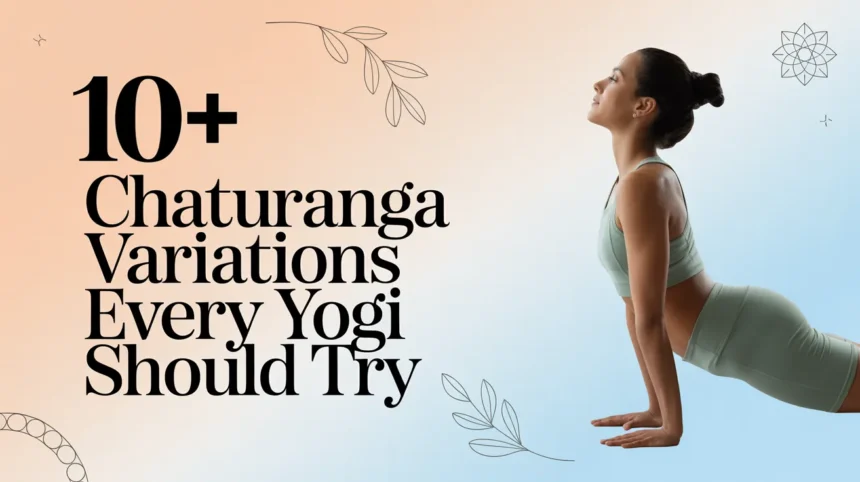
Chaturanga Dandasana, or Four-Limbed Staff Pose, is a cornerstone of yoga practice, often flowing seamlessly between plank and Upward-Facing Dog. While it may seem like a simple pose, mastering Chaturanga requires strength, control, and precise alignment. Practicing different variations of Chaturanga can help you build upper body and core strength, improve stability, and keep your yoga practice engaging.
- Explore These 10+ Chaturanga Variations
- 1. Standard Chaturanga Dandasana
- 2. Knee-Down Chaturanga
- 3. Chair Chaturanga (Utkatasana Variation)
- 4. Side Plank to Chaturanga Flow
- 5. Chaturanga to Dolphin Plank
- 6. Tricep-Focused Chaturanga
- 7. Elevated Chaturanga
- 8. One-Leg Chaturanga
- 9. Chaturanga with Knee-to-Elbow Crunch
- 10. Yoga Push-Up Flow (Chaturanga + Upward Dog + Downward Dog)
- Tips for Practicing Chaturanga Safely
Whether you are a beginner or an advanced yogi, exploring Chaturanga variations can elevate your practice and prevent plateaus.
Explore These 10+ Chaturanga Variations
Chaturanga Dandasana, often called the “four-limbed staff pose,” is a true powerhouse. It strengthens the upper body, stabilizes the core, and improves overall body awareness. But you don’t have to stick to the standard version every time. By exploring different variations, you can challenge your muscles in new ways, prevent plateaus, and make your yoga practice more dynamic and fun.
Here are 10+ Chaturanga variations every yogi should try, ranging from gentle beginner-friendly options to advanced strength and balance challenges. Along the way, we’ll also link to complementary yoga asanas to enrich your practice.
1. Standard Chaturanga Dandasana
The classic Chaturanga forms the foundation for all other variations.
How to do it:
Start in a plank with your wrists directly under your shoulders. Engage your core, tuck your elbows close to your sides, and lower your body slowly until your upper arms are parallel to the mat. Keep your shoulders slightly above your elbows and avoid letting your hips sag. From here, you can flow into Cobra Pose or Urdhva Mukha Svanasana.
Why it matters: Strengthens arms, shoulders, and core, improves posture, and prepares your body for more advanced poses.
2. Knee-Down Chaturanga
Ideal for beginners or anyone easing into upper body strength.
How to do it:
From plank, gently lower your knees to the mat while keeping elbows tucked. Lower your chest toward the floor, maintaining a straight line from head to knees. Push back up to plank or transition into Balasana to rest.
Why it matters: Reduces wrist and shoulder strain, builds strength gradually, and helps you gain confidence before attempting full Chaturanga.
3. Chair Chaturanga (Utkatasana Variation)
This variation engages the legs along with the upper body.
How to do it:
Begin in Tadasana or chair pose with knees bent and arms extended forward. Lean slightly forward and lower into a mini Chaturanga. Press back up to standing or flow into a Standing Yoga Pose sequence.
Why it matters: Strengthens quads, core, and arms; a great full-body option to add leg engagement to your practice.
4. Side Plank to Chaturanga Flow
Add balance and oblique engagement to your routine.
How to do it:
Start in plank, transition to side plank on your right. Slowly lower into Chaturanga, keeping your core and side engaged. Return to plank and repeat on the left. Complement with Garudasana (Eagle Pose) for additional stability and focus.
Why it matters: Strengthens obliques, arms, and shoulders while improving balance and coordination.
5. Chaturanga to Dolphin Plank
Focuses on the shoulders and upper back.
How to do it:
From plank, lower into Chaturanga. Press your hips up and back into Dolphin Plank (forearms on the mat, hips lifted). Return to Chaturanga and repeat.
Why it matters: Enhances shoulder stability, strengthens the upper back and arms, and develops core endurance.
6. Tricep-Focused Chaturanga
A tricep-centric variation for defined arms.
How to do it:
From plank, tuck elbows tightly against your ribs and lower slowly, focusing on triceps engagement. Hold briefly, then press back up. Pair with Bridge Pose to stretch the chest and open shoulders.
Why it matters: Tones arms, strengthens core engagement, and improves overall upper-body definition.
7. Elevated Chaturanga
A controlled variation using props.
How to do it:
Place hands on a yoga block, step, or low platform. Lower chest toward the block with elbows at 90 degrees, then press back up.
Why it matters: Builds strength safely, ideal for beginners or those recovering from wrist/shoulder strain.
8. One-Leg Chaturanga
Challenge your balance and coordination.
How to do it:
From plank, lift one leg while lowering into Chaturanga. Keep hips square and core tight, alternating legs with each repetition. Combine with Locust Pose for posterior chain strengthening.
Why it matters: Strengthens core, glutes, and arms while testing stability and body awareness.
9. Chaturanga with Knee-to-Elbow Crunch
Integrate core work with your Chaturanga practice.
How to do it:
From plank, lower into Chaturanga. As you rise, draw your right knee toward your left elbow, then left knee toward your right elbow. Move smoothly and controlled. Complement with Seated Forward Fold for hamstring release afterward.
Why it matters: Engages the core, tones abs, and strengthens arms and shoulders—excellent for functional strength and coordination.
10. Yoga Push-Up Flow (Chaturanga + Upward Dog + Downward Dog)
Integrate Chaturanga seamlessly into your Vinyasa flow.
How to do it:
From plank, lower into Chaturanga. Flow into Cobra Pose or Urdhva Mukha Svanasana, then lift hips into Downward-Facing Dog. Repeat 5–10 times with smooth transitions and mindful breath. Include Surya Namaskar in your warm-up for a complete flow.
Why it matters: Builds full-body strength, flexibility, and endurance while integrating Chaturanga into a dynamic sequence.
Tips for Practicing Chaturanga Safely
Chaturanga is an incredible pose for building strength, but it can be challenging if not performed mindfully. Here are some key tips to keep your practice safe and effective:
- Engage your core – Keep your abdominal muscles active throughout the pose to support your lower back and maintain a stable plank line. A strong core is essential for both balance and injury prevention.
- Tuck your elbows – Keep your elbows close to your torso rather than letting them flare out. This protects your shoulders and ensures proper engagement of the triceps and chest muscles.
- Maintain proper alignment – Avoid sagging or arching your lower back. Imagine creating a straight line from your head to your heels (or knees if modifying). Proper alignment distributes weight evenly and prevents unnecessary strain.
- Use props when needed – Yoga blocks, straps, or even a wall can make Chaturanga variations more accessible, especially for beginners or those recovering from wrist or shoulder injuries. Props are excellent tools for building strength safely.
- Listen to your body – Strength develops gradually. Don’t push through pain, especially in the shoulders, wrists, or lower back. Modify as needed and focus on steady, controlled movements rather than speed or repetitions.
- Focus on breath – Coordinate your movements with your inhale and exhale. Lower on the exhale, lift on the inhale. Breath control helps maintain stability, prevents tension, and enhances mindfulness.
- Warm up properly – Prepare your wrists, shoulders, and core with gentle stretches or sun salutations before attempting Chaturanga, especially more advanced variations.
Final Thoughts
Chaturanga is far more than a transitional pose in your flow—it’s a full-body powerhouse. It strengthens the arms, shoulders, chest, core, and even the legs while cultivating body awareness, control, and stability.
Exploring these 10+ Chaturanga variations allows you to challenge your body in different ways, keep your practice engaging, and gradually progress from beginner-friendly modifications to advanced strength builders.
Start slowly, focus on alignment and breath, and add variations that suit your level. Over time, you’ll notice improvements not only in your yoga practice but also in your overall strength, posture, and confidence—both on and off the mat.
Remember: the journey with Chaturanga is about progress, not perfection. Each variation you try is an opportunity to grow stronger, steadier, and more mindful.