
Tight hips are one of the most common physical issues people experience today. Long hours of sitting, limited movement, and lack of stretching can cause the hip flexor muscles to tighten and shorten over time. This can lead to discomfort, poor posture, reduced mobility, and even lower back pain.
- What Are Hip Flexors?
- Signs Your Hip Flexors Are Tight
- Benefits of Stretching Hip Flexors
- Improved Mobility
- Better Posture
- Reduced Lower Back Pain
- Enhanced Athletic Performance
- Injury Prevention
- 10+ Simple Hip Flexor Stretches You Can Do at Home
- 1. Kneeling Hip Flexor Stretch
- 2. Standing Hip Flexor Stretch
- 3. Low Lunge Stretch
- 4. Butterfly Stretch
- 5. Pigeon Pose
- 6. Couch Stretch
- 7. Bridge Pose
- 8. Seated Hip Flexor Stretch
- 9. Lunging Hip Flexor Stretch with Reach
- 10. Frog Stretch
- 11. Supine Hip Flexor Stretch
- Tips for Safe Hip Flexor Stretching
- Sample Daily Hip Flexor Stretch Routine
Adding hip flexor stretches to your routine can dramatically improve flexibility, reduce tension, and support better overall movement. The best part is that you don’t need a gym or special equipment. Many effective hip stretches can be done right at home.
In this guide, you’ll learn 10+ simple hip flexor stretches you can do at home to loosen tight hips, improve mobility, and reduce pain.
What Are Hip Flexors?
Hip flexors are a group of muscles located at the front of the hip and upper thigh area. These muscles are responsible for helping you lift your knees, bend at the hips, and move your legs forward. Anytime you walk, run, climb stairs, or bend to pick something up, your hip flexors are actively working.
Several muscles work together to form the hip flexor group. The most important ones include:
- Iliopsoas – the primary and strongest hip flexor muscle responsible for lifting the leg.
- Rectus Femoris – part of the quadriceps that helps flex the hip and extend the knee.
- Sartorius – a long muscle that assists with hip and knee movement.
- Tensor Fasciae Latae (TFL) – helps stabilize the hip and support leg movement.
These muscles play a crucial role in daily movement and physical activity. They allow your legs to move smoothly and help maintain balance and stability.
However, when hip flexors become tight or shortened, they can pull the pelvis forward and create extra pressure on nearby muscles and joints. Over time, this imbalance may contribute to lower back pain, poor posture, and reduced mobility.
Signs Your Hip Flexors Are Tight
Many people experience tight hip flexors without immediately recognizing the symptoms. Because these muscles are heavily affected by long periods of sitting, tightness can gradually develop over time.
Some common signs of tight hip flexors include:
- Lower back pain, especially after sitting for long periods
- Hip stiffness or tightness when moving or stretching
- Difficulty standing up straight after sitting
- Poor posture, such as an exaggerated arch in the lower back
- Limited range of motion in the hips
- Discomfort during walking, running, or exercising
People who spend many hours sitting at a desk, driving, gaming, or using mobile devices are more likely to develop tight hip flexors. When the hips remain in a bent position for long periods, the muscles can shorten and lose flexibility.
Regular stretching and movement can help loosen the hip flexors, improve mobility, and reduce the risk of pain or injury.
Benefits of Stretching Hip Flexors
Regularly stretching your hip flexor muscles can have a significant positive impact on your overall mobility, posture, and physical comfort. Because these muscles play a major role in daily movements such as walking, sitting, bending, and running, keeping them flexible helps your body move more efficiently and reduces strain on surrounding muscles and joints.
Below are some of the key benefits of incorporating hip flexor stretches into your routine.
Improved Mobility
One of the biggest benefits of hip flexor stretching is improved mobility. When these muscles are tight, they restrict the natural movement of the hips and legs. Stretching helps lengthen the muscles, increasing flexibility and allowing your hips to move more freely. This makes everyday activities like walking, climbing stairs, and bending much easier and more comfortable.
Better Posture
Tight hip flexors can tilt the pelvis forward, which often leads to poor posture and an exaggerated arch in the lower back. Over time, this can affect the alignment of the spine. Regular stretching helps release tension in the front of the hips, allowing the pelvis and spine to return to a more natural position and improving overall posture.
Reduced Lower Back Pain
Many people experience lower back pain due to tight hip muscles. When the hip flexors are shortened, they can pull on the pelvis and place extra stress on the lower back. Stretching these muscles helps relieve this tension and can reduce discomfort in the lower back area.
Enhanced Athletic Performance
Flexible hip flexors are important for athletes and active individuals. They allow for smoother and more powerful movements during activities such as running, cycling, jumping, and sports. Stretching regularly can improve stride length, speed, and overall performance while helping the body move more efficiently.
Injury Prevention
Keeping the hip flexors flexible helps protect the body from injuries. Tight muscles are more likely to become strained or overworked during physical activity. By stretching regularly, you help maintain healthy muscle balance, reduce stress on the joints, and lower the risk of injuries in the hips, lower back, and legs.
Adding hip flexor stretches to your daily routine—even for just a few minutes—can greatly improve flexibility, movement quality, and overall physical well-being.
10+ Simple Hip Flexor Stretches You Can Do at Home
If you want to improve hip flexibility and reduce tightness, adding a few simple stretches to your routine can make a big difference. Many of these movements are also commonly included in yoga routines such as Surya Namaskar, which helps improve flexibility and overall body mobility. These stretches also complement several standing yoga poses that strengthen the legs and open the hips.
For best results, hold each stretch for 20–30 seconds and repeat 2–3 times per side.
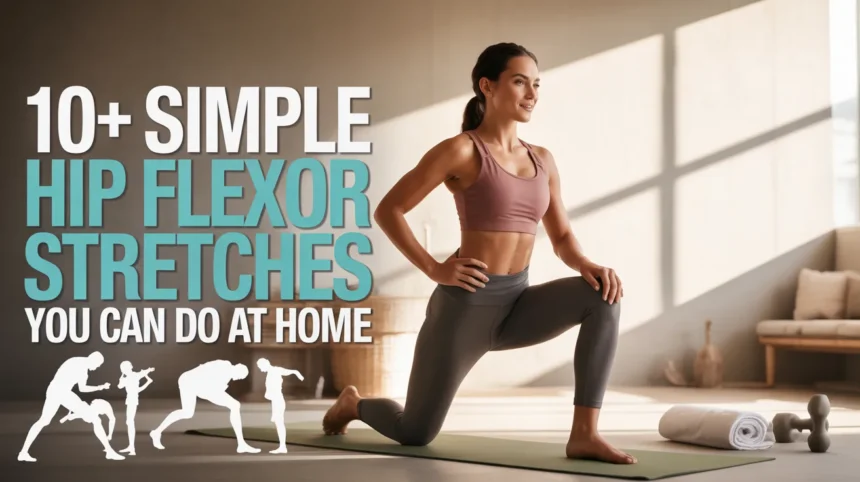
1. Kneeling Hip Flexor Stretch
The kneeling hip flexor stretch is one of the most effective exercises for loosening tight muscles at the front of the hips. It directly targets the hip flexors while improving lower body flexibility.
How to do it:
- Start by kneeling on your right knee.
- Place your left foot flat on the floor in front of you.
- Keep your torso upright and your back straight.
- Gently push your hips forward until you feel a stretch in the front of your hip.
This stretch uses a similar lower-body stance found in Virabhadrasana II, which also helps open the hips and strengthen the legs.
2. Standing Hip Flexor Stretch
This stretch is perfect if you prefer exercises that can be performed while standing. It can also support posture improvement, similar to the alignment focus in Tadasana.
Steps:
- Stand upright with your feet hip-width apart.
- Step one foot back into a small lunge.
- Bend the front knee slightly while keeping your back straight.
- Push your hips gently forward.
You should feel a stretch along the hip of the back leg.
3. Low Lunge Stretch
The low lunge stretch is widely used in yoga because it opens the hips and lengthens the hip flexors.
How to perform:
- Step your right foot forward into a lunge.
- Lower your left knee to the ground.
- Keep your chest upright.
- Press your hips gently forward.
This stretch also prepares the body for deeper back-bending movements like Cobra Pose.
4. Butterfly Stretch
The butterfly stretch helps loosen the hips and inner thighs while improving flexibility.
Steps:
- Sit on the floor with your back straight.
- Bring the soles of your feet together.
- Hold your feet with both hands.
- Gently press your knees toward the floor.
After stretching, many people like to relax in Balasana, a gentle resting pose that releases tension in the hips and lower back.
5. Pigeon Pose
Pigeon pose is a powerful hip-opening stretch commonly practiced in yoga.
How to do it:
- Start in a plank position.
- Bring one knee forward toward your hands.
- Extend the opposite leg behind you.
- Lower your hips toward the floor.
This stretch is often included in sequences of yoga asanas designed to improve flexibility and mobility.
6. Couch Stretch
The couch stretch is very effective for people who spend long hours sitting.
Instructions:
- Kneel with your back facing a wall or couch.
- Place one foot against the wall behind you.
- Position the other leg in front like a lunge.
- Keep your torso upright.
Regular hip stretching can also help prepare the body for advanced poses like Dhanurasana, which requires strong flexibility in the hips and spine.
7. Bridge Pose
Although this movement strengthens the glutes and lower back, it also stretches the hip flexors.
Steps:
- Lie on your back with knees bent.
- Keep your feet flat on the floor.
- Lift your hips upward.
- Hold the position for a few seconds.
This exercise closely resembles Bridge Pose, a yoga posture known for improving spinal health and strengthening the posterior chain.
8. Seated Hip Flexor Stretch
This gentle stretch is ideal for beginners and can easily be done while sitting.
How to perform:
- Sit at the edge of a chair.
- Extend one leg behind you.
- Keep the other foot flat on the floor.
- Lean forward slightly to deepen the stretch.
This movement pairs well with the Seated Forward Fold, another effective stretch for the hips and hamstrings.
9. Lunging Hip Flexor Stretch with Reach
Adding an overhead reach makes the stretch more effective.
Steps:
- Start in a lunge position.
- Raise the arm on the side of your back leg.
- Reach overhead and lean slightly to the opposite side.
This movement challenges balance in a way similar to Garudasana.
10. Frog Stretch
The frog stretch is excellent for opening the hips and improving flexibility.
Instructions:
- Start on your hands and knees.
- Spread your knees apart slowly.
- Keep your ankles aligned with your knees.
- Push your hips backward gently.
This stretch closely resembles Frog Pose, which is widely recommended for hip mobility.
11. Supine Hip Flexor Stretch
This relaxing stretch helps lengthen the hip flexor muscles while lying down.
Steps:
- Lie on your back near the edge of a bed or bench.
- Pull one knee toward your chest.
- Let the other leg hang off the edge.
- Relax and hold the stretch.
Understanding positions like prone vs supine can help you better perform this type of stretch.
Tips for Safe Hip Flexor Stretching
To get the best results from any hip flexor stretch, it’s important to practice safely and consistently. Proper technique not only improves flexibility but also helps prevent injuries. Follow these simple tips to make your stretching routine more effective.
Warm Up First
Before starting any hip flexor stretch, take a few minutes to warm up your muscles. Light activities like walking, marching in place, or gentle leg swings help increase blood flow and prepare your body for deeper stretching.
Avoid Bouncing
When performing a hip flexor stretch, move slowly and avoid bouncing or jerking motions. Stretching should be controlled and steady. Holding the position allows the muscles to gradually lengthen and relax.
Breathe Normally
Breathing plays an important role in stretching. Take slow, deep breaths while holding each hip flexor stretch. Proper breathing helps relax the muscles and allows you to stretch more comfortably.
Stretch Consistently
Consistency is key when it comes to flexibility. Practicing a hip flexor stretch regularly—even for a few minutes each day—can gradually improve mobility and reduce tightness in the hips.
Stop If You Feel Pain
Stretching should create a gentle pulling sensation, not pain. If a hip flexor stretch feels uncomfortable or painful, ease out of the position and adjust your form. Listening to your body helps prevent strain or injury.
Sample Daily Hip Flexor Stretch Routine
You can follow this quick routine at home to keep your hips flexible and mobile. Performing a short hip flexor stretch routine daily can help relieve tightness caused by prolonged sitting.
Simple routine:
- Kneeling Hip Flexor Stretch – 30 seconds each side
- Low Lunge Stretch – 30 seconds each side
- Butterfly Stretch – 30 seconds
- Pigeon Pose – 30 seconds each side
- Bridge Pose – 10 repetitions
This routine takes only 5–10 minutes but can significantly improve hip mobility and flexibility.
Final Thoughts on hip flexor stretch
Tight hips are extremely common in modern lifestyles, especially for people who spend long hours sitting at a desk or using digital devices. Fortunately, improving hip mobility doesn’t require complicated workouts. Practicing a simple hip flexor stretch routine at home can make a noticeable difference.
Adding these 10+ simple hip flexor stretch exercises to your daily routine can help relieve muscle tension, improve posture, and reduce discomfort in the hips and lower back.
Even spending just a few minutes each day performing a hip flexor stretch can improve how your body moves and feels. Start slowly, stay consistent, and over time your hips will become stronger, more flexible, and much more comfortable.