
Sukhasana, often called the Easy Pose, is one of the most accessible and foundational meditation postures in yoga. Its simplicity makes it ideal for beginners, yet its benefits extend to seasoned practitioners as well. Sitting comfortably in Sukhasana allows you to cultivate stillness, focus, and a deeper connection to your breath.
Proper posture is more than just sitting “nicely.” Alignment of the spine, hips, and shoulders directly affects your breathing, energy flow, and mental clarity. Slouching or tension can disrupt your meditation practice, leading to discomfort, distraction, and fatigue.
In this guide, you’ll discover practical tips and adjustments to make Sukhasana more comfortable and effective. Whether you struggle with tight hips, lower back stiffness, or simply want to deepen your meditation, these strategies will help you improve your practice instantly.
What is Sukhasana?
Sukhasana, which translates from Sanskrit as “easy” or “pleasant pose,” is a cross-legged sitting posture commonly used for meditation and breathing exercises. Its origins are rooted in classical yoga, where it has long been valued for promoting physical stability and mental calm.
The benefits of Sukhasana extend to both body and mind. Physically, it encourages proper spinal alignment, opens the hips, and reduces tension in the back and shoulders. Mentally, it fosters focus, mindfulness, and a sense of grounding, making it easier to settle into meditation.
One of the greatest strengths of Sukhasana is its versatility. It is suitable for beginners who may need cushions or props for support, as well as experienced meditators who can sit comfortably for longer sessions. By mastering Sukhasana, anyone can build a solid foundation for a consistent and rewarding meditation practice.
Why Posture Matters in Meditation
Your posture is the foundation of any effective meditation practice. Proper alignment in Sukhasana ensures that your spine is straight, shoulders are relaxed, and hips are open, which directly affects how well you breathe. Deep, unrestricted breathing allows oxygen to flow efficiently to the brain and body, keeping you alert and focused during meditation.
When posture is neglected, several common issues can arise. Slouching or hunching can lead to back and neck pain, while crossing your legs incorrectly may strain the knees or hips. These discomforts often cause restlessness, distract your mind, and make it difficult to maintain a consistent practice. Fatigue and mental agitation are frequent companions of poor posture, even during short meditation sessions.
Sukhasana, when practiced with attention to alignment, supports a sustainable meditation routine. By creating a stable and comfortable base, it allows the body to relax while the mind remains alert, making it easier to meditate longer without strain. Proper posture transforms meditation from a fleeting activity into a restorative, calming practice.
Preparing Your Space for Sukhasana
Creating the right environment is just as important as your physical posture. Begin by choosing a quiet, clutter-free area where you won’t be disturbed. A serene space helps reduce distractions, allowing your mind to settle more easily into meditation.
Props can make Sukhasana significantly more comfortable, especially for beginners or those with tight hips. Cushions, folded blankets, or yoga blocks can elevate the hips, reduce strain on the knees, and provide gentle support for your spine. Even a small adjustment can make long meditation sessions much more enjoyable.
Lighting, temperature, and ambiance also play a role in your meditation focus. Soft, natural light or dim lighting creates a calming atmosphere, while a moderate room temperature ensures physical comfort. Adding subtle elements like a scented candle, incense, or calming music can enhance mindfulness, helping you remain present throughout your practice.
Step-by-Step Guide to Perfect Sukhasana
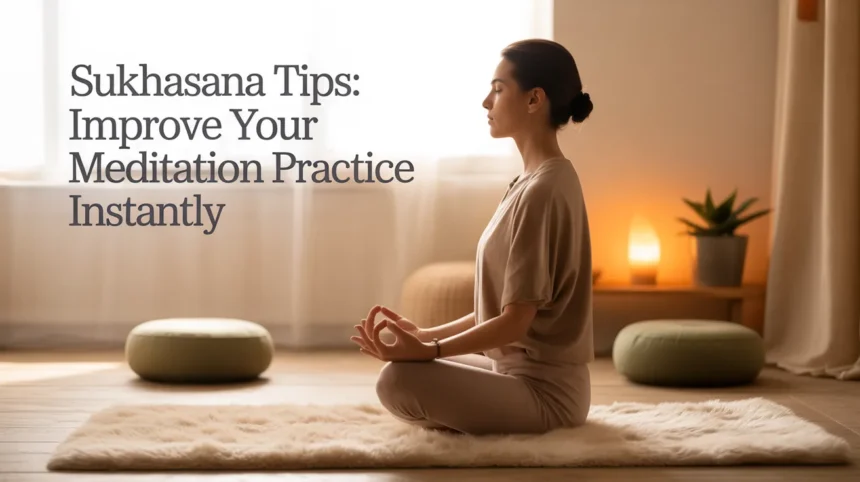
Mastering Sukhasana begins with proper positioning. Start by sitting on the floor or a cushion with your legs crossed comfortably. Your spine should be straight but relaxed, shoulders rolled back gently, and chest open. Keep your pelvis slightly tilted forward to support natural lumbar curvature, which prevents slouching.
Hand placement can enhance focus during meditation. Rest your hands on your knees or thighs with palms facing up or down. You may also use mudras, such as the Gyan Mudra (thumb and index finger touching), to encourage energy flow and concentration. Keep your head aligned with your spine, chin slightly tucked, and gaze softly forward or gently closed.
Breathing is central to Sukhasana practice. Focus on slow, deep, and even breaths. Allow the diaphragm to expand fully on each inhale and contract naturally on the exhale. This rhythm calms the nervous system and deepens meditation.
If you have tight hips, knees, or lower back discomfort, don’t force the pose. Use cushions or yoga blocks under the knees or sit on a folded blanket to elevate the hips. Gentle hip stretches before meditation can also make sitting more comfortable and reduce strain, allowing you to maintain the posture longer with ease.
Tips to Improve Your Meditation Practice Instantly
Even a few small adjustments can transform your meditation experience. While Sukhasana provides a stable and comfortable base, improving your focus, relaxation, and overall mindfulness often comes down to simple, practical habits. By incorporating a few key strategies, you can enhance your meditation sessions immediately—making them more effective, enjoyable, and sustainable.
Tip 1: Start with Short Sessions
If you’re new to meditation, begin with 5–10 minutes and gradually increase duration as your body and mind adapt. Short, consistent sessions often yield better results than infrequent long ones.
Tip 2: Focus on Breath or Mantra
Directing your attention to your breath or a chosen mantra helps prevent distractions. Even a single word or phrase repeated silently can anchor your mind and enhance mindfulness.
Tip 3: Use Props for Comfort
Cushions, blankets, or yoga blocks can make a huge difference in maintaining posture without strain. Adjust as needed to support your knees, hips, or lower back.
Tip 4: Incorporate Gentle Stretches Before Sitting
Performing light stretches for the hips, hamstrings, and back before sitting can reduce tension, making Sukhasana more accessible and comfortable.
Tip 5: Practice Consistently
Meditating at the same time each day establishes a habit and signals your mind and body to prepare for focus and relaxation. Consistency strengthens both posture and mindfulness over time.
Common Mistakes to Avoid
Even in a seemingly simple posture like Sukhasana, small misalignments can disrupt your meditation practice. Being aware of common mistakes helps you sit more comfortably and maintain focus for longer periods.
- Slouching or rounding the back: Allowing your spine to collapse can cause tension in the neck and shoulders, restrict breathing, and reduce alertness. Always aim for a gentle, upright alignment.
- Forcing knees or hips beyond comfort: Stretching too aggressively can lead to pain or injury. Sukhasana should feel stable and relaxed, not strained. Use props or adjustments to accommodate your body.
- Ignoring discomfort: Pain or tightness is a signal from your body. Ignoring it can break your concentration and even create negative associations with meditation. Adjust your posture or take short breaks as needed.
- Comparing your pose to others: Meditation is personal, and everyone’s flexibility and body structure differ. Focus on your own comfort and alignment rather than trying to mirror someone else.
Being mindful of these mistakes ensures that Sukhasana supports, rather than hinders, your meditation practice.
Advanced Variations (Optional for Experienced Practitioners)
Once you’re comfortable with the basics of Sukhasana, you can explore variations to deepen your meditation or integrate more advanced yoga techniques:
- Sukhasana with extended arms or gentle spinal twists: These variations can help open the chest and shoulders, improving circulation and energy flow during meditation.
- Combining with pranayama or meditation techniques: Practice focused breathing exercises, such as alternate nostril breathing, or incorporate guided meditation and visualization for enhanced mindfulness.
- Using meditation cushions or yoga benches for longer sessions: Elevated supports reduce strain on the hips and knees, allowing experienced practitioners to meditate for extended periods without discomfort.
These variations can enrich your practice and provide new ways to engage the body and mind while seated in Sukhasana.
Conclusion
Sukhasana may look simple, but it is a powerful foundation for meditation. Proper posture enhances comfort, breathing, and focus, creating a stable platform for mindfulness and inner calm.
By implementing the tips outlined in this guide—from alignment and breathing techniques to practical props and routines—you can improve your meditation practice instantly.
Take a few moments today to sit in Sukhasana, notice your breath, and feel the difference that proper posture and mindful adjustments make. With consistency and awareness, Sukhasana can become your go-to posture for a calmer, more focused, and restorative meditation practice.