
Back pain has become one of the most common health concerns in modern life—and it’s not hard to see why. Long hours spent sitting at desks, scrolling on phones, poor posture, and a lack of physical activity all put continuous strain on the spine. Over time, this leads to stiffness, muscle imbalances, and chronic discomfort that can interfere with your daily routine.
- Why Yoga Works for Back Pain
- 1. Strengthens Core and Back Muscles
- 2. Improves Posture and Alignment
- 3. Increases Flexibility
- 4. Reduces Stress and Muscle Tension
- 5. Enhances Body Awareness
- 1. Child’s Pose (Balasana)
- 2. Cobra Pose (Bhujangasana)
- 3. Bridge Pose (Setu Bandhasana)
- 4. Seated Forward Fold (Paschimottanasana)
- 5. Locust Pose (Salabhasana)
- 6. Cat-Cow Stretch
- 7. Tadasana (Mountain Pose)
- 8. Warrior II (Virabhadrasana II)
- 9. Upward-Facing Dog (Urdhva Mukha Svanasana)
- 10. Ardha Matsyendrasana (Half Spinal Twist)
- Bonus: Add Surya Namaskar to Your Routine
- Pro Tips for Beginners
- Final Thoughts
The good news? You don’t need expensive treatments, medications, or complicated fitness programs to start feeling better. In fact, one of the most effective and natural solutions is something simple and accessible—yoga.
With the right yoga asanas, you can gently stretch tight muscles, strengthen weak areas, and restore balance to your body. Yoga works not just on the physical level but also helps calm the mind, which plays a major role in how we experience pain.
Whether you’re dealing with mild discomfort or recurring back issues, a consistent yoga practice can help you:
- Improve spinal alignment
- Increase flexibility
- Build strength in supporting muscles
- Reduce tension and stress
In this beginner-friendly guide, we’ll explore 10 of the best yoga poses for back pain relief, carefully selected to be safe, effective, and easy to practice at home. You’ll also find helpful resources and deeper insights so you can build a routine that supports long-term spinal health.
Why Yoga Works for Back Pain
Yoga is much more than just stretching—it’s a holistic practice that targets the root causes of back pain rather than just masking the symptoms. Unlike high-impact workouts, yoga uses slow, controlled movements combined with mindful breathing to gently rehabilitate the body.
When practiced regularly, yoga helps restore balance between strength and flexibility—two key factors in maintaining a healthy spine.
Here’s how yoga helps relieve back pain:
1. Strengthens Core and Back Muscles
A weak core is one of the leading causes of back pain. Yoga poses engage deep core muscles and the muscles surrounding your spine, providing better support and reducing strain on your lower back.
2. Improves Posture and Alignment
Poor posture—especially from sitting or slouching—puts excessive pressure on the spine. Yoga trains your body to maintain proper alignment, whether you’re standing, sitting, or moving.
3. Increases Flexibility
Tight muscles, especially in the hamstrings, hips, and shoulders, can pull on the spine and cause discomfort. Yoga gently stretches these areas, improving mobility and reducing stiffness.
4. Reduces Stress and Muscle Tension
Stress often leads to unconscious muscle tightening, particularly in the neck and lower back. Yoga incorporates breathing techniques and relaxation, helping release this built-up tension.
5. Enhances Body Awareness
Yoga improves your awareness of how your body moves and feels. This helps you identify harmful habits and make adjustments that prevent future pain.
If you’re looking to go beyond just back pain relief and build a well-rounded practice, explore these yoga asanas that improve overall health to create a sustainable and effective routine.
1. Child’s Pose (Balasana)
Best for: Gentle relaxation and lower back relief
The Balasana (Child’s Pose) is one of the most restorative poses in yoga, making it perfect for beginners or anyone experiencing lower back discomfort. This posture gently elongates the spine while releasing tension in the hips, thighs, and shoulders. It’s also an excellent resting pose that can be integrated between more challenging asanas.
How to do it:
- Kneel on your yoga mat with your big toes touching and knees spread wide.
- Sit back on your heels and fold forward, resting your forehead on the mat.
- Extend your arms forward or place them alongside your body for a more relaxed version.
- Breathe deeply for 30–60 seconds, letting your body melt into the stretch.
Benefits:
- Relieves lower back pain: Gently decompresses the spine and releases tension in the lumbar region.
- Calms the nervous system: Encourages deep breathing and relaxation, reducing stress-induced muscle tightness.
- Stretches hips and thighs: Opens tight hip flexors, which often contribute to back discomfort.
2. Cobra Pose (Bhujangasana)
Best for: Strengthening the lower back
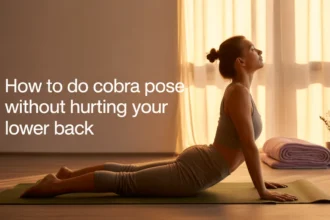
The Cobra Pose is a gentle yet powerful backbend that strengthens the muscles along the spine, improves posture, and enhances spinal flexibility. It’s especially beneficial for those with sedentary lifestyles, as it counteracts the effects of prolonged sitting.
How to do it:
- Lie on your stomach (prone position) with legs extended and the tops of your feet pressing into the mat.
- Place your hands under your shoulders, elbows close to your body.
- Inhale and gently lift your chest, keeping your lower ribs on the mat. Avoid overextending the lower back.
- Hold for 15–30 seconds, breathing deeply, and slowly release.
Benefits:
- Strengthens spinal muscles: Engages the erector spinae, which support proper posture.
- Opens chest and shoulders: Counteracts slouching and improves respiratory capacity.
- Reduces stiffness: Enhances flexibility in the spine and upper back.
3. Bridge Pose (Setu Bandhasana)
Best for: Spine stability and glute strength
The Bridge Pose is excellent for strengthening the lower back, glutes, and core while also supporting spinal alignment. This pose is often recommended for people experiencing mild lower back pain because it gently stretches the chest and hip flexors while strengthening the posterior chain.
How to do it:
- Lie on your back with knees bent and feet flat on the floor, hip-width apart.
- Press your feet and arms into the floor and lift your hips toward the ceiling.
- Keep thighs parallel and shoulders grounded.
- Hold for 20–40 seconds, then slowly lower your hips back down.
Benefits:
- Strengthens back and hips: Activates glutes and lower back muscles, providing better support for the spine.
- Improves posture: Aligns the pelvis and spine, counteracting slouching.
- Reduces lower back strain: Stabilizes the lumbar region, decreasing pressure on spinal discs.
4. Seated Forward Fold (Paschimottanasana)
Best for: Deep stretch for the back body
The Paschimottanasana (Seated Forward Fold) is a staple for stretching the entire back body, including the spine, hamstrings, and calves. It’s ideal for relieving tension in the lower back and can be modified for beginners using a strap around the feet or bending the knees slightly.
How to do it:
- Sit with legs extended straight in front of you, spine tall.
- Inhale to lengthen your torso, then exhale and hinge forward from the hips.
- Reach toward your feet or shins while keeping your spine long.
- Hold for 30–60 seconds, breathing deeply.
Benefits:
- Relieves tight hamstrings: Stretching the hamstrings reduces pull on the pelvis and lower back.
- Reduces lower back tension: Provides a gentle spinal decompression.
- Improves flexibility: Lengthens the spine and enhances overall range of motion.
Tip: You can also practice a chair-based forward fold if hamstring tightness or mobility issues prevent a full seated fold.
5. Locust Pose (Salabhasana)
Best for: Strengthening the entire back
The Locust Pose (Salabhasana) targets the muscles along your spine, glutes, and back of the legs. Strengthening these areas is crucial for supporting the lumbar region and preventing recurring back pain. This pose is great for counteracting the weakening effects of long periods of sitting.
How to do it:
- Lie on your stomach with arms along your sides, palms facing down.
- Inhale and lift your chest, arms, and legs off the floor simultaneously.
- Keep your gaze forward or slightly downward to protect the neck.
- Hold for 10–20 seconds, then exhale and lower back down.
Benefits:
- Builds back strength: Activates spinal muscles to support healthy posture.
- Improves posture: Strengthened back muscles help reduce slouching.
- Reduces pain caused by weakness: Regular practice stabilizes the spine and prevents overuse injuries.
6. Cat-Cow Stretch
Best for: Improving spinal mobility
The Cat-Cow Stretch is a gentle flow that combines two movements—arching the back like a cat and dipping the spine like a cow. It’s one of the most beginner-friendly yoga exercises and helps warm up the spine, making it easier to move into other poses. This stretch works well in both prone and supine positions—learn more about the differences inprone vs supine yoga positions.
How to do it:
- Start on all fours with shoulders stacked over wrists and hips over knees.
- Inhale and lift your tailbone and chest toward the ceiling (Cow Pose), letting your belly drop.
- Exhale and round your spine upward, tucking your chin and tailbone (Cat Pose).
- Repeat slowly for 8–10 rounds, syncing movement with breath.
Benefits:
- Improves flexibility: Gently stretches the spine and torso.
- Reduces stiffness: Mobilizes tight areas, especially in the lower back.
- Warms up the spine: Prepares the body for deeper stretches and postures.
7. Tadasana (Mountain Pose)
Best for: Posture correction
The Tadasana (Mountain Pose) is deceptively simple but incredibly powerful. This standing pose builds awareness of proper alignment, strengthens the legs and spine, and sets a foundation for other standing yoga exercises. It’s also considered a core pose for standing yoga poses for strength.
How to do it:
- Stand with feet together, grounding evenly through both feet.
- Engage your thighs, lift your chest, and draw your shoulders back.
- Lengthen the spine upward while keeping your head balanced over the torso.
- Breathe steadily and hold for 30–60 seconds.
Benefits:
- Improves posture: Aligns the spine, shoulders, and hips.
- Strengthens legs and spine: Builds endurance in lower body and core.
- Builds body awareness: Teaches proper alignment, which prevents back strain.
8. Warrior II (Virabhadrasana II)
Best for: Strength and stability
The Virabhadrasana II (Warrior II Pose) is a foundational yoga posture that strengthens the legs, core, and back while enhancing balance. It encourages proper alignment and supports spinal health, making it ideal for those with mild to moderate back pain.
How to do it:
- Step your feet wide apart and turn the front foot forward.
- Bend your front knee directly over the ankle, keeping the back leg straight.
- Extend arms parallel to the floor, gazing over your front hand.
- Hold for 20–40 seconds, then switch sides.
Benefits:
- Improves balance: Stabilizes both body and mind.
- Strengthens lower body: Builds endurance in legs, hips, and glutes.
- Supports spinal alignment: Encourages an upright, strong spine during daily activities.
9. Upward-Facing Dog (Urdhva Mukha Svanasana)
Best for: Deep spinal stretch
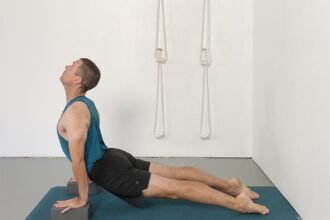
The Urdhva Mukha Svanasana is a backbend that stretches the chest and spine while strengthening the back muscles. This pose is especially helpful for relieving stiffness caused by prolonged sitting or poor posture.
How to do it:
- Lie face down with legs extended and tops of feet pressing into the floor.
- Place hands under shoulders and press through your palms to lift your chest and thighs off the mat.
- Keep shoulders relaxed and gaze slightly forward.
- Hold for 15–30 seconds, then slowly lower.
Benefits:
- Expands chest: Opens the front body, counteracting hunching.
- Strengthens spine: Activates erector spinae and supporting muscles.
- Improves posture: Encourages proper alignment and reduces forward slouching.
10. Ardha Matsyendrasana (Half Spinal Twist)
Best for: Spine mobility and detox
The Ardha Matsyendrasana (Half Spinal Twist) is a seated twist that enhances spinal flexibility, stretches the back muscles, and stimulates digestion. Twisting poses like this one help relieve stiffness and maintain spinal health.
How to do it:
- Sit with legs extended. Bend your right knee and place the foot on the outside of the left thigh.
- Place your right hand behind you for support and left elbow outside the right knee.
- Inhale to lengthen the spine, exhale and twist gently toward the right.
- Hold for 20–30 seconds, then switch sides.
Benefits:
- Increases spine mobility: Encourages rotation in the thoracic and lumbar spine.
- Improves digestion: Twisting stimulates abdominal organs.
- Reduces stiffness: Releases tension in the lower and upper back.
Bonus: Add Surya Namaskar to Your Routine
If you want a complete yoga routine for back pain relief, consider incorporating Surya Namaskar (Sun Salutation) into your practice. Surya Namaskar is a dynamic sequence of yoga poses performed in a flowing rhythm, combining forward bends, backbends, and stretches that target the entire body.
Why it’s beneficial for back pain:
- Improves flexibility: Each movement stretches the spine, hamstrings, and shoulders, reducing stiffness.
- Strengthens the entire body: Engages the core, back, and legs to provide support for the spine.
- Supports spinal health: The alternating forward and backward bends help maintain natural curvature and mobility.
How to practice:
- Start with 3–5 rounds at a slow pace, focusing on smooth transitions and deep breathing.
- Gradually increase the number of rounds as your strength and flexibility improve.
- Combine it with poses like Balasana or Sukhasana for rest and relaxation.
Surya Namaskar can be a morning energizer or evening spinal reset, making it a versatile addition to any beginner routine.
Pro Tips for Beginners
Starting a yoga practice for back pain can feel intimidating, but a few key tips make it much easier and safer:
- Start slow and avoid pushing into pain: Respect your body’s limits to prevent strain or injury.
- Focus on proper alignment: Correct posture ensures maximum benefit and reduces risk of aggravating pain.
- Practice consistently: Even 10–15 minutes daily can lead to noticeable improvements over time.
- Combine movement with breathing: Deep, mindful breathing helps release tension and supports spinal health.
- Include relaxation poses: Finish your session with gentle poses like Sukhasana or short meditation to calm the nervous system.
Extra tip: Using a yoga mat with cushioning and optional props like yoga blocks or straps can make poses more accessible and comfortable for beginners.
Final Thoughts
Back pain doesn’t have to control your life. By incorporating these beginner-friendly yoga poses into your daily routine, you can gradually:
- Strengthen the muscles supporting your spine
- Improve flexibility and range of motion
- Reduce tension and discomfort
- Enhance posture and body awareness
Remember: progress takes time. Start small, stay consistent, and let your body guide you. Even a short daily practice can make a meaningful difference in your spinal health and overall wellbeing.
Yoga is not just exercise—it’s a journey toward a healthier back, a calmer mind, and a more balanced life.