

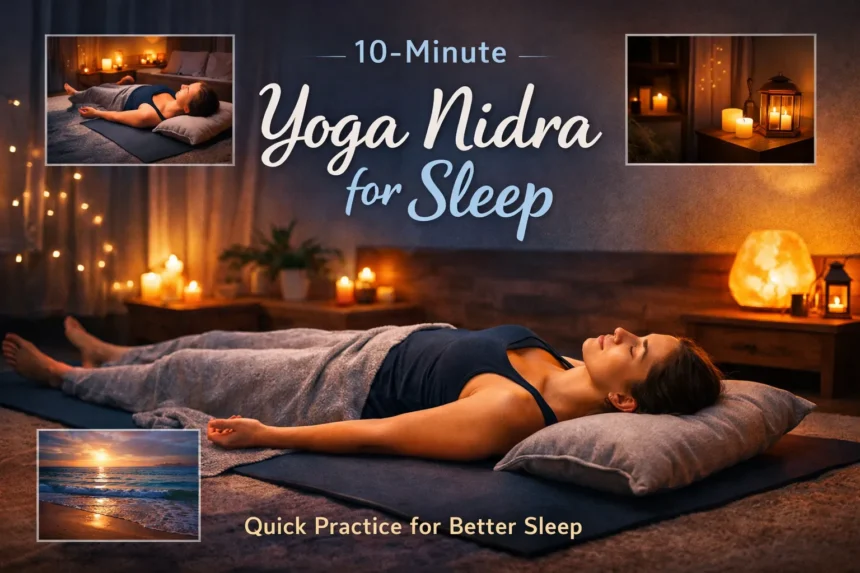
Sleep problems are increasingly common in today’s fast-paced world. Stress, screen time, and busy schedules often leave people tossing and turning at night. If you’re searching for a natural way to relax your mind and fall asleep faster, Yoga Nidra for sleep might be the solution.
Yoga Nidra, often called yogic sleep, is a guided meditation technique that helps the body reach deep relaxation while the mind remains aware. Even a 10-minute Yoga Nidra practice can calm your nervous system, reduce stress, and prepare your body for restful sleep.
In this guide, you’ll learn what Yoga Nidra is, how it improves sleep, and how to practice a simple 10-minute Yoga Nidra routine before bedtime.
What Is Yoga Nidra?
Yoga Nidra is a form of guided meditation and deep relaxation that places the body in a unique state between wakefulness and sleep. The term comes from the Sanskrit words “yoga,” meaning union or awareness, and “nidra,” meaning sleep. Together, Yoga Nidra refers to a conscious state of deep relaxation often described as “awake sleep.”
During a Yoga Nidra session, practitioners usually lie comfortably on their backs in Savasana (Corpse Pose), allowing the body to fully relax. A teacher or audio guide then leads them through a series of gentle instructions designed to guide attention inward. These instructions often include body awareness, breath observation, mental imagery, and intention setting.
Unlike normal sleep, where the mind becomes unconscious, Yoga Nidra encourages you to remain aware while your body enters a deeply restful state. This balance between awareness and relaxation allows the brain to slow down while releasing physical and emotional tension stored in the body.
As the practice progresses, brainwave activity may shift toward alpha and theta states, which are associated with deep relaxation, creativity, and the early stages of sleep. These states help calm the nervous system and promote a sense of inner peace.
Because Yoga Nidra works on both the body and mind, it has become a widely used technique for improving overall well-being. Many people incorporate it into their daily or nightly routines to support mental clarity, emotional balance, and better sleep.
People often practice Yoga Nidra for several reasons, including:
- Deep relaxation that allows the body to recover from physical and mental stress
- Stress reduction by calming the nervous system and slowing racing thoughts
- Better sleep quality by preparing the body for deeper rest
- Anxiety relief through mindful awareness and relaxation
- Improved mental clarity by giving the mind time to reset and recharge
One of the greatest advantages of Yoga Nidra is its simplicity and accessibility. The practice requires no physical flexibility, strength, or previous meditation experience. Since it is performed while lying down and involves minimal movement, it is suitable for people of all ages and fitness levels.
For individuals who struggle with insomnia, chronic stress, or difficulty relaxing before bed, Yoga Nidra offers a gentle and effective way to calm the mind and prepare the body for restful sleep.
How Yoga Nidra Helps Improve Sleep
Yoga Nidra is widely known for its ability to relax both the body and the mind, making it an effective technique for improving sleep. When you practice Yoga Nidra, your body shifts from a state of stress and alertness into a state of deep relaxation. This happens because the practice activates the parasympathetic nervous system, often called the “rest-and-digest” response.
The parasympathetic nervous system is responsible for slowing down bodily functions after periods of stress or activity. When it becomes active, your heart rate decreases, breathing becomes slower and deeper, muscles release tension, and the body begins to restore itself. This natural relaxation response prepares the body for sleep and helps reduce the mental and physical barriers that often prevent restful nights.
Unlike ordinary relaxation techniques, Yoga Nidra guides the mind through a structured sequence of awareness, breathing, and visualization. This gradual process helps quiet the nervous system and create the ideal conditions for falling asleep naturally.
Key Benefits for Sleep
Yoga Nidra is known for its powerful ability to support healthy sleep patterns. By guiding the body into a state of deep relaxation, this practice helps calm the nervous system and prepare the mind for rest. Unlike regular relaxation methods, Yoga Nidra follows a structured process that gradually releases physical tension and quiets mental activity. As a result, the body becomes more receptive to sleep, and the mind is less likely to stay stuck in cycles of stress or overthinking. Regular practice can improve both the quality and duration of sleep while helping the body recover from daily stress.
1. Reduces Stress and Anxiety
Stress is one of the biggest causes of sleep problems. Yoga Nidra calms the mind and helps release emotional tension, making it easier to drift into sleep.
2. Slows Down Racing Thoughts
Many people struggle to sleep because their minds are constantly active. Guided body awareness in Yoga Nidra gently shifts attention away from worries.
3. Promotes Deep Relaxation
Research suggests that Yoga Nidra can move the brain into alpha and theta states, similar to the early stages of sleep.
4. Improves Sleep Quality
Practicing Yoga Nidra regularly may help people fall asleep faster and experience deeper, more restorative sleep cycles.
Preparing for a 10-Minute Yoga Nidra Session
Creating the right environment is key to making your Yoga Nidra practice effective, even if it’s just 10 minutes. A calm and comfortable space helps your body relax faster and your mind stay focused during the practice.
Simple Preparation Tips:
- Choose a quiet space: Pick a room where you won’t be disturbed. This allows you to fully focus on relaxation.
- Dim the lights or use a dark room: Lower lighting signals your body that it’s time to rest and helps trigger the natural sleep response.
- Lie comfortably: Use a yoga mat, bed, or any flat surface. Keep your arms at your sides with palms facing upward for comfort.
- Use a blanket or pillow: If your body tends to get cold or needs support, add a blanket or pillow under your head, knees, or lower back.
- Turn off distractions: Silence your phone and other devices to prevent interruptions. Even small notifications can pull your attention away.
- Set an intention: Mentally remind yourself that this time is for relaxation and self-care. A simple intention can enhance focus and help you fully let go.
By preparing your environment and body, you make it easier to enter a deeply relaxed state quickly, so your 10-minute Yoga Nidra session becomes more effective and restorative.
10-Minute Yoga Nidra Practice for Sleep
Practicing Yoga Nidra before bed is one of the easiest ways to relax your mind and prepare your body for deep sleep. Even a short 10-minute session can help you release tension, calm racing thoughts, and transition smoothly into rest. Below is a detailed step-by-step guide for a quick bedtime practice.
1. Get Comfortable (1 Minute)
Start by lying on your back in Savasana (corpse pose). Keep your legs slightly apart and arms relaxed at your sides with palms facing upward. Close your eyes and take a few slow, deep breaths, feeling your body gradually sink into the surface beneath you.
- Make sure your head, neck, and back are supported with a pillow or folded blanket if needed.
- Allow your body to fully settle without forcing any positions.
- Focus on releasing tension from each muscle as you exhale.
The goal is to create a foundation of comfort and stability so that the body can completely relax.
2. Set an Intention (Sankalpa) (1 Minute)
A Sankalpa is a short, positive statement or intention repeated mentally to help focus your mind. This sets a calm, peaceful tone for your practice and reinforces a sense of well-being.
Examples of intentions:
- “I am calm and relaxed.”
- “My body welcomes deep sleep.”
- “I release stress and rest peacefully.”
Repeat your chosen intention silently three times, feeling each word resonate within you. This mental focus helps your mind let go of distractions and prepares it for deeper relaxation.
3. Body Awareness Scan (4 Minutes)
Move your attention slowly through different parts of your body, noticing sensations without judgment. This body scan releases tension and improves awareness of where stress may be held.
Focus sequence:
- Right hand → right arm → right shoulder
- Left hand → left arm → left shoulder
- Chest and abdomen
- Hips and legs
- Feet and toes
At each stage, allow the muscles to soften and your mind to rest on that area. If your thoughts wander, gently bring your attention back to the part of the body you’re scanning. This mindful awareness encourages total physical and mental relaxation.
4. Breath Awareness (2 Minutes)
Shift focus to your breathing. Notice its natural rhythm without trying to control it. Feel your belly rise on each inhale and fall on each exhale.
- You can count your breaths to enhance focus: Inhale – 1, Exhale – 2, up to 10, then start again.
- Deep, slow breaths help activate the parasympathetic nervous system, which promotes calmness and prepares your body for sleep.
- Pay attention to the subtle sensations of breath moving through your body – warmth, coolness, or gentle movement.
This mindful breathing helps quiet mental chatter and brings a sense of inner peace.
5. Visualize Calmness (1 Minute)
Now bring a calming image or scene to mind. Visualization deepens relaxation and signals your body that it’s time to rest.
- Imagine walking along a quiet beach at sunset, feeling the sand under your feet.
- Picture a serene forest path with gentle sunlight filtering through the trees.
- Visualize gentle ocean waves lapping the shore, with each wave carrying away stress.
Immerse yourself in the scene completely. Let the sensations—sounds, textures, and smells—be vivid in your imagination. This visualization creates a mental “safe space” for deep rest.
6. Drift Into Sleep (1 Minute)
Finally, release all structure and simply rest. Allow your mind and body to drift naturally into sleep.
- Don’t force sleep; let it come gently.
- If you remain awake, your body is still receiving deep relaxation benefits.
- With repeated practice, you may notice falling asleep faster and staying asleep longer.
Yoga Nidra encourages your nervous system to relax fully while keeping your mind lightly aware, making the transition into sleep smooth and effortless.
Tips to Get the Best Results
Consistency is essential for experiencing the full benefits of Yoga Nidra. Regular practice trains your mind and body to associate the routine with relaxation and sleep, making it easier to unwind each night.
Helpful Tips:
- Practice every night before bed – even a short 10-minute session can make a difference.
- Use guided audio recordings if you’re new – they help maintain focus and flow.
- Keep sessions short – 10–20 minutes is ideal for nightly practice.
- Avoid screens right before practice – bright lights and digital stimulation can interfere with relaxation.
- Combine with gentle evening stretches – light stretching can release tension and enhance the effects of Yoga Nidra.
Over time, your body will naturally begin to associate Yoga Nidra with restfulness, helping you fall asleep faster and sleep more deeply.
Who Should Try Yoga Nidra?
Yoga Nidra is safe, gentle, and accessible for most people. It is especially helpful for those who experience:
- Insomnia or difficulty falling asleep
- Chronic stress from work or daily life
- Anxiety or burnout
- Mental fatigue or constant overthinking
- Difficulty relaxing before bed
Since the practice requires no physical movement, flexibility, or prior experience, it’s ideal for beginners, older adults, and people of all fitness levels. Even those with limited mobility can benefit from the calming effects.
Final Thoughts
If you find it difficult to relax and fall asleep at night, dedicating just 10 minutes to Yoga Nidra for sleep before bed can make a significant difference. This gentle meditation practice helps calm the mind, release tension in the body, and prepare you for deep, restorative sleep.
One of the greatest advantages of Yoga Nidra for sleep is its simplicity—it requires no special equipment, no flexibility, and no prior experience. All you need is a quiet space, a comfortable position, and a few minutes of focused attention to let go of stress and unwind.
With consistent practice, Yoga Nidra for sleep can become a soothing nightly ritual that not only improves your sleep but also reduces stress, eases anxiety, and promotes overall mental and physical well-being. Over time, these small nightly sessions of Yoga Nidra for sleep can create a lasting sense of calm, balance, and rejuvenation in your life.