
Stress has become an almost inevitable part of modern life. Between work deadlines, family responsibilities, and the constant influx of information from digital devices, our nervous systems are often in a state of tension. This chronic stress can manifest physically as stiff shoulders, tight hamstrings, poor posture, or disrupted sleep—and mentally as anxiety, fatigue, and difficulty concentrating.
- What is Plow Pose (Halasana)?
- Benefits of Halasana for Stress Relief
- 1. Calms the Nervous System
- 2. Relieves Tension in the Spine and Shoulders
- 3. Improves Circulation and Detoxification
- 4. Enhances Flexibility and Posture
- 5. Boosts Mental Clarity and Focus
- How to Practice Halasana Safely
- Modifications and Props
- 10-Minute Stress Relief Routine with Plow Pose
- 1 min – Gentle Deep Breathing (Seated Position)
- 2 min – Cat-Cow Stretches
- 1 min – Forward Fold (Uttanasana)
- 3 min – Plow Pose (Halasana)
- 2 min – Shoulder Bridge or Supported Bridge Pose
- 1 min – Savasana with Deep Belly Breathing
- Precautions
- Final Thoughts
While there are many ways to manage stress, yoga provides a unique mind-body approach that addresses both the physical and psychological symptoms of tension. Among the vast repertoire of yoga poses, Plow Pose (Halasana) is particularly effective. Unlike simple stretches or seated meditation, Plow Pose is an inversion that gently repositions the body in a way that calms the nervous system, stretches critical areas of tension, and encourages mental clarity.
Plow Pose is considered a gentle but highly effective stress-relief tool because it combines several therapeutic elements: inversion, spinal elongation, and controlled breathing. In just 10 minutes of focused practice, this pose can provide a noticeable reduction in physical tightness and mental restlessness. In this article, we’ll explore what Plow Pose is, why it works for stress relief, and how to practice it safely—even for beginners.
What is Plow Pose (Halasana)?
Plow Pose, known as Halasana in Sanskrit (derived from “hala,” meaning plow), is a classic yoga inversion that involves lying on your back and lifting your legs overhead so your feet reach the floor behind your head. When performed correctly, the spine forms a gentle curve, the shoulders are grounded, and the core muscles are actively engaged to maintain balance and control.
This pose may look advanced at first glance, but it can be adapted to suit different levels of flexibility and experience. Key areas involved include:
- Spine: The spine elongates and decompresses, which can relieve tension from prolonged sitting or poor posture.
- Shoulders and Upper Back: Supporting the body in this inverted position stretches the shoulders and opens the chest.
- Hamstrings: Extending the legs overhead provides a deep stretch for tight hamstrings, improving overall lower body flexibility.
- Core: Engaging the abdominal muscles stabilizes the body and protects the lower back.
Unlike standing poses or forward folds that primarily target muscles, inversions like Plow Pose also influence the nervous system. By bringing the legs above the heart, blood flow to the brain increases slightly, which can stimulate the parasympathetic nervous system—the part responsible for rest, digestion, and relaxation. This shift promotes a sense of calm, clarity, and reduced stress.
Even though Halasana might appear challenging, it is highly accessible with proper modifications, such as using blankets under the shoulders or bending the knees slightly. With guidance and consistent practice, almost anyone—from beginners to experienced yogis—can experience its calming and restorative benefits.
Benefits of Halasana for Stress Relief
Plow Pose (Halasana) is not just a stretch—it’s a mind-body practice that actively reduces stress and promotes relaxation. By combining inversion, spinal extension, and deep breathing, this pose works on multiple levels. Let’s break down the key benefits in more detail:
1. Calms the Nervous System
Stress activates the sympathetic nervous system, which triggers the “fight or flight” response, increasing heart rate, blood pressure, and cortisol levels. Plow Pose, being an inversion, stimulates the parasympathetic nervous system, often called the “rest and digest” system.
When your legs are elevated above your heart, your body naturally slows the heart rate, encourages deeper breathing, and sends calming signals to the brain. Practicing Halasana regularly can lower stress hormones and create a sense of calm that lasts well beyond the mat. Many yoga practitioners report feeling mentally lighter and emotionally balanced after a short session in Plow Pose.
2. Relieves Tension in the Spine and Shoulders
Sitting for long hours, staring at screens, or holding stress in the body often leads to tight shoulders, stiff necks, and compressed spines. Plow Pose gently stretches the spine and opens the shoulder region, relieving built-up tension.
This elongation not only eases discomfort but also improves energy flow along the back and spine. By stretching these critical areas, Halasana can help prevent headaches, shoulder tightness, and upper-back pain—all common physical symptoms of stress.
3. Improves Circulation and Detoxification
Inversions like Plow Pose promote healthy blood circulation, helping oxygen-rich blood reach the brain more efficiently. Additionally, the pose supports lymphatic drainage, which assists in flushing out metabolic waste from the body.
This improved circulation can leave you feeling refreshed, rejuvenated, and mentally alert after practice. Regular Plow Pose sessions can contribute to a natural detoxifying effect and enhance overall vitality, making it an excellent choice for reducing the physical impacts of stress.
4. Enhances Flexibility and Posture
The posture stretches the hamstrings, shoulders, and spine, gradually increasing flexibility over time. As flexibility improves, your body can maintain better alignment in daily activities, which reduces strain on muscles and joints.
Good posture is closely linked to mental well-being—when your spine is aligned, your body can relax more easily, decreasing tension-related stress. Practicing Halasana consistently can help correct postural imbalances and reduce muscular fatigue.
5. Boosts Mental Clarity and Focus
One of the most profound benefits of Plow Pose is its mental and emotional impact. Inversions can quiet a busy mind, helping to reduce racing thoughts and anxiety. Many practitioners notice improved concentration, clearer thinking, and emotional calmness after performing Halasana.
By integrating deep, mindful breathing during the pose, you can enhance these cognitive benefits, creating a mini meditation in motion that balances both mind and body.
How to Practice Halasana Safely
Plow Pose is highly beneficial but requires care, especially for beginners. Practicing with awareness reduces the risk of strain or injury. Here’s a step-by-step guide:
1. Start Lying on Your Back
Lie flat on your yoga mat with your arms relaxed by your sides, palms facing down. Engage your core slightly to protect your lower back. Keep your legs extended and spine long, focusing on deep, calming breaths to prepare the body.
2. Lift Your Legs
Slowly raise your legs to a 90-degree angle using your abdominal muscles. Keep the legs straight and toes pointed. Avoid jerky movements—smooth control is key to protecting your spine.
3. Support Your Hips
Place your hands on your lower back for support. This helps stabilize your torso as your legs move overhead. Maintaining support prevents compression in the lumbar region and ensures you can safely lower your legs behind your head.
4. Lower Your Feet Toward the Floor
Gently bring your legs over your head, aiming for the toes to touch the floor behind you. Keep the neck neutral, avoiding turning your head to the sides, which can strain the cervical spine. Focus on slow, even breathing to maintain calm and stability.
5. Hold the Pose
Hold Plow Pose for 20–60 seconds, depending on comfort and experience. Use slow, controlled breaths to deepen relaxation and activate the stress-relief benefits of the inversion. Listen to your body—never force your feet to the floor.
6. Exit Safely
To come out, press your hands into your lower back and slowly roll your spine down onto the mat, keeping your core engaged. Bring your legs back to starting position and rest in Savasana (Corpse Pose) for a few breaths to absorb the calming effects.
Modifications and Props
Plow Pose can be adapted for all levels using props and small adjustments:
- Blanket Under Shoulders: Place a folded blanket under the shoulders to reduce neck strain and maintain safe cervical alignment.
- Bend Knees: If hamstrings are tight, bend the knees slightly to ease the stretch and prevent lower back strain.
- Use a Wall: Practicing near a wall allows your feet to rest safely if they don’t reach the floor, providing extra support and confidence.
These modifications allow beginners, seniors, or people with limited flexibility to enjoy the full benefits of Plow Pose without risk of injury.
10-Minute Stress Relief Routine with Plow Pose
Incorporating Plow Pose into a short, structured sequence can maximize its stress-relief benefits. Here’s a step-by-step 10-minute routine designed to calm your mind, release tension, and restore energy.
1 min – Gentle Deep Breathing (Seated Position)
Start your practice in a comfortable seated position. Close your eyes, lengthen your spine, and place your hands on your knees. Take slow, deep breaths, inhaling through the nose for a count of four, holding for one beat, and exhaling for a count of six. This simple breathwork activates your parasympathetic nervous system, reducing stress and preparing the body for movement.
2 min – Cat-Cow Stretches
Move onto all fours for Cat-Cow stretches. As you inhale, lift your chest and tailbone while allowing the belly to drop (Cow Pose). On the exhale, round your spine and tuck your chin (Cat Pose). Repeat slowly for two minutes. This dynamic spinal movement releases tension, warms up the back, and gently mobilizes the vertebrae—perfect prep for Plow Pose.
1 min – Forward Fold (Uttanasana)
Standing or seated, fold forward from the hips, letting your head hang heavy toward the floor. Keep your knees slightly bent if needed. Forward folds calm the nervous system, relieve stress in the neck and shoulders, and stretch the hamstrings in preparation for inversion. Breathe deeply and let the tension melt away.
3 min – Plow Pose (Halasana)
Transition into Plow Pose, holding it in comfortable intervals. Beginners may hold for 20–30 seconds, gradually increasing to 60 seconds as flexibility improves. Focus on slow, even breathing, letting the spine elongate and the body relax into the inversion. Remember to use props like a blanket under your shoulders or a wall to support your feet if needed.
2 min – Shoulder Bridge or Supported Bridge Pose
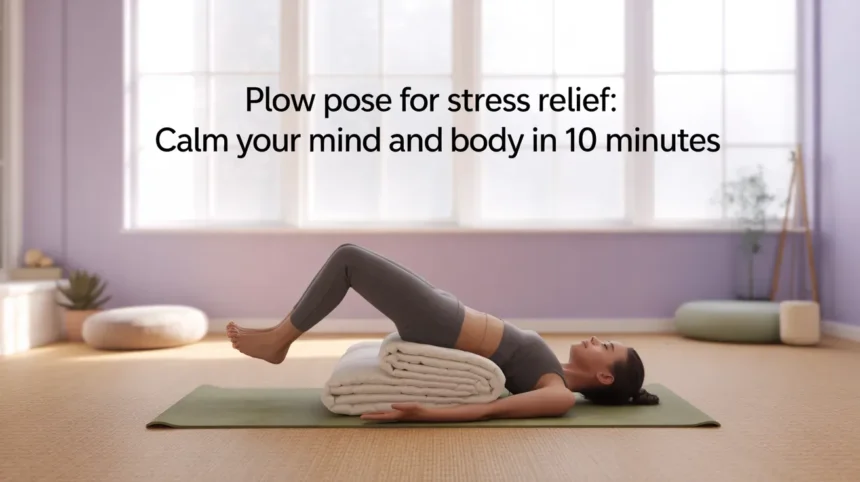
After Halasana, gently roll back onto your back and lift your hips into Bridge Pose or a supported variation with a yoga block under the sacrum. This counterpose releases the lower back, opens the chest, and helps restore spinal alignment. Hold for two minutes, breathing deeply and feeling the gentle stretch along the spine.
1 min – Savasana with Deep Belly Breathing
Finish with Savasana (Corpse Pose). Lie flat on your back, arms relaxed at your sides, and focus on deep belly breathing. Feel the body absorbing the benefits of your practice—the calm, light feeling in your shoulders, spine, and mind. This final minute ensures your nervous system is fully relaxed before returning to daily activities.
This sequence is perfect for morning or evening practice, helping you start your day calm or unwind after a stressful day at work. Even a single 10-minute session can leave you feeling mentally refreshed and physically lighter.
Precautions
While Plow Pose is highly beneficial, certain precautions should be observed:
- Avoid if you have neck or spinal injuries, high blood pressure, or glaucoma. These conditions can be aggravated by inversions.
- Keep your neck long and avoid turning your head while in Plow Pose to protect the cervical spine.
- Use props and modifications as needed, such as a folded blanket under the shoulders, slightly bent knees, or practicing near a wall.
- Move slowly in and out of the pose to avoid dizziness or strain, especially if you are new to inversions.
- Listen to your body—never force your feet to the floor or hold the pose beyond your comfort level.
By following these precautions, you can safely enjoy the calming and restorative benefits of Halasana.
Final Thoughts
Plow Pose is more than just a flexibility exercise—it’s a holistic tool for stress management. This simple inversion works on multiple levels:
- Physically, it stretches the spine, shoulders, and hamstrings.
- Mentally, it helps quiet a busy mind and reduce anxiety.
- Energetically, it improves circulation and encourages relaxation.
Incorporating Plow Pose into your daily 10-minute routine can have a profound effect over time. You may notice better sleep, reduced tension, improved posture, and a sense of inner calm that carries throughout your day.
Whether practiced in the morning to start the day with clarity or in the evening to unwind, Plow Pose provides a quick, accessible, and effective way to relieve stress. With consistency, mindful breathing, and the proper use of modifications, this yoga inversion can become a cornerstone of your wellness practice.