
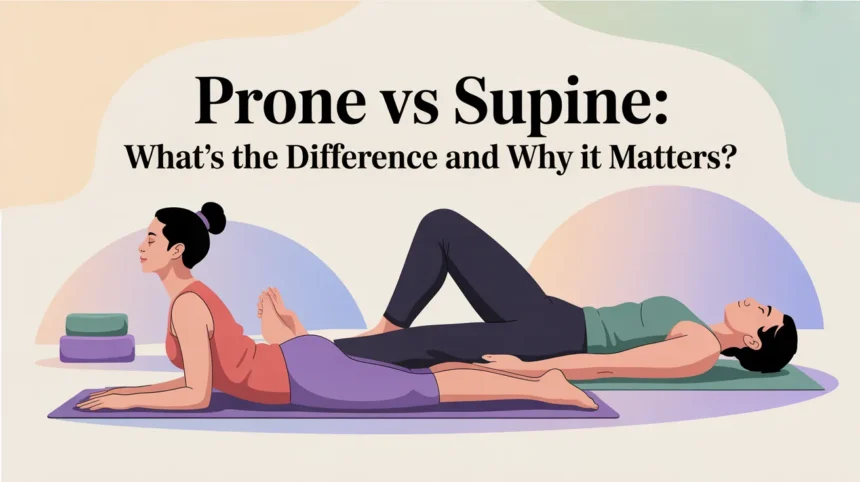
Understanding prone vs supine body positioning is fundamental in yoga, as the way you orient your body can dramatically affect muscle engagement, breath capacity, and nervous system response. Two terms you’ll often hear in classes, teacher trainings, and pose breakdowns are prone and supine. While they may sound clinical, they simply describe whether you are lying on your stomach (prone) or on your back (supine).
- What Does Prone Mean in Yoga?
- What Does Supine Mean in Yoga?
- Common Supine Yoga Poses
- What Happens in the Body in Supine Poses?
- Benefits of Supine Poses
- Supine vs Prone: Why Both Matter
- Prone vs Supine: Key Differences
- Why the Difference Matters in Yoga
- How to Integrate Prone and Supine Poses Into Your Practice
- Which Position Is Better?
- Final Thoughts
In yoga, the distinction between prone vs supine goes far beyond anatomy. Your body’s orientation influences spinal alignment, energy flow, breathing mechanics, and even your emotional experience on the mat.
Let’s explore prone vs supine positions in more detail, how they function in yoga practice, and why understanding this difference can enhance both your physical and mental well-being.
What Does Prone Mean in Yoga?
Prone refers to lying face down on your stomach, and in yoga, prone poses are primarily used for backbends, strengthening postures, and core engagement. When comparing prone vs supine, prone positions activate the posterior chain—the muscles along the back of your body—while supine poses generally focus on relaxation, spinal alignment, and anterior body opening. Understanding this distinction can help you sequence your practice more effectively and get the most benefit from each pose.
Common Prone Yoga Poses
Some of the most frequently practiced prone yoga poses include:
- Bhujangasana (Cobra Pose) – A gentle backbend that strengthens the spine, opens the chest, and improves posture.
- Salabhasana (Locust Pose) – Builds strength in the lower back, glutes, and hamstrings while lengthening the spine.
- Dhanurasana (Bow Pose) – A deeper backbend that stretches the front body and engages the entire posterior chain.
- Makarasana (Crocodile Pose) – A restorative prone posture that encourages breath awareness in the back ribs and relaxation of the shoulders.
These poses range from gentle and restorative to challenging and energizing, demonstrating the versatility of prone positioning in yoga practice.
What Happens in the Body in Prone Poses?
When you lie prone, several key changes occur in the body:
- The Front Body Grounds Into the Mat
The abdomen, chest, and hips press into the floor, creating stability and a tactile connection to the earth. This grounding increases body awareness and provides a stable base for movement. - The Back Body Muscles Engage
Lifting the chest, arms, or legs against gravity requires engagement of the spinal extensors, glutes, hamstrings, upper back muscles, and posterior shoulders. This strengthens the muscles that support upright posture and counteracts the effects of prolonged sitting or slouching. - Chest Expansion Against Gravity
Unlike supine poses, where the chest can open passively, prone poses require active lifting. This strengthens the thoracic spine and encourages proper alignment of the shoulders and ribcage. - Breathing Shifts Toward the Back Ribs
With the belly pressed into the mat, diaphragmatic breathing is restricted, naturally directing breath into the back ribs and side body. This enhances lung capacity, improves posture awareness, and deepens breath control.
Benefits of Prone Poses
Prone yoga poses offer both physical and energetic benefits:
- Strengthens the Back Body – Prone positions engage muscles that support the spine, glutes, and hamstrings, improving overall posture.
- Improves Spinal Alignment and Posture – By activating the back muscles, prone poses counteract rounded shoulders and forward head posture.
- Opens the Chest and Shoulders – Backbends stretch tight pectorals, hip flexors, and the front of the body.
- Enhances Spinal Extension – Prone poses help restore spinal flexibility and mobility, balancing forward folds and flexion movements.
- Builds Heat and Energy – Because prone postures often require effort, they generate warmth, increase circulation, and energize the body.
- Develops Focus and Awareness – Lying prone engages proprioception, helping you feel the position and alignment of your spine, pelvis, and limbs.
Prone poses are energizing and restorative in different ways, making them ideal for the middle of a yoga sequence when the body is warm and ready to build strength. In the larger context of prone vs supine, prone postures represent activation, strength, and spinal engagement, while supine positions offer rest, integration, and relaxation.
What Does Supine Mean in Yoga?
Supine refers to lying face up on your back, and in yoga, supine poses are often restorative, grounding, or alignment-focused. When comparing prone vs supine, supine positions are generally associated with relaxation, spinal decompression, and gentle opening of the front body, whereas prone poses activate the back body and build strength. Understanding the difference helps you sequence your practice effectively, balancing effort with recovery.
Common Supine Yoga Poses
Some frequently practiced supine poses include:
- Savasana (Corpse Pose) – A foundational relaxation pose used for deep rest and integration at the end of a practice.
- Setu Bandha Sarvangasana (Bridge Pose) – Strengthens the back while gently opening the chest and hip flexors.
- Supta Baddha Konasana – Opens the hips, stretches the inner thighs, and promotes calm.
- Supta Matsyendrasana – Supports spinal rotation and relieves tension along the back and sides.
Supine poses can range from fully restorative to mildly strengthening, but they are generally calming and accessible for most practitioners.
What Happens in the Body in Supine Poses?
When lying supine, several physiological and energetic changes occur:
- The Spine Rests Neutrally on the Mat
The back body is supported, allowing the spine to lengthen naturally without effort. This neutral alignment reduces tension and encourages proper posture awareness. - The Front Body Opens Gently
The chest, abdomen, and hip flexors experience a passive stretch. This helps counteract tightness from sitting or prone poses and encourages balance between the front and back body. - The Nervous System Tends to Relax
Supine positioning often triggers the parasympathetic nervous system (rest-and-digest response), lowering heart rate, reducing stress hormones, and promoting calm. - Breath Naturally Expands Into the Belly
With the abdomen free from pressure, diaphragmatic breathing becomes easier. This encourages full, slow breaths that enhance oxygenation, mindfulness, and relaxation.
Benefits of Supine Poses
Supine poses offer a range of physical, mental, and energetic benefits:
- Promotes Deep Relaxation – Ideal for centering, cooling down, or reducing stress.
- Supports Spinal Alignment – Neutral support allows the spine to reset after prone or standing postures.
- Encourages Diaphragmatic Breathing – Deep belly breathing enhances lung capacity and calms the mind.
- Reduces Stress and Tension – Helps release tight muscles in the chest, shoulders, and hips.
- Enhances Body Awareness – Provides an opportunity to feel alignment, subtle movements, and proprioception.
Because supine poses are grounding and restorative, they are frequently incorporated at the beginning of class for centering or at the end of practice for cool-down and integration.
Supine vs Prone: Why Both Matter
When considering prone vs supine, it’s clear that each position serves complementary purposes:
- Prone poses focus on activation, strength, and spinal extension.
- Supine poses prioritize relaxation, alignment, and breath awareness.
A balanced yoga practice includes both orientations, allowing the body to build strength while also integrating rest and recovery. Understanding prone vs supine ensures your practice is both safe and effective, enhancing your physical, mental, and energetic experience on the mat.
Prone vs Supine: Key Differences
| Feature | Prone | Supine |
| Body Orientation | Face down | Face up |
| Muscle Focus | Back body engagement | Front body softening |
| Energy Level | Energizing | Calming |
| Breathing Pattern | Back rib expansion | Belly expansion |
| Typical Placement | Mid-sequence strength work | Beginning or end relaxation |
Both positions serve unique purposes in a balanced yoga routine.
Why the Difference Matters in Yoga
Understanding the difference between prone vs supine is essential for practicing yoga safely and effectively. Each orientation affects the body in unique ways—from breathing mechanics to muscle engagement, nervous system activation, and spinal health. Incorporating both prone and supine poses ensures a well-rounded practice that balances strength and relaxation.
1. Breath Awareness
Breath behaves differently depending on whether you are prone or supine.
- Prone poses: Breathing into the back ribs enhances posterior lung expansion. Since the abdomen presses into the mat, diaphragmatic movement is limited, which encourages lateral and back rib expansion. This improves oxygen flow to the posterior lungs and strengthens the connection between breath and spinal extension.
- Supine poses: The front body is free from pressure, making diaphragmatic breathing more accessible. The belly naturally rises and falls with each inhale and exhale, calming the nervous system and supporting restorative practice.
This subtle distinction between prone vs supine can significantly influence oxygenation, breath awareness, and overall nervous system regulation.
2. Muscle Activation vs Release
Prone and supine poses also differ in how they engage muscles:
- Prone = Strength + Activation
Prone postures recruit the spinal extensors, glutes, hamstrings, and posterior shoulder muscles. These poses counteract forward-slouching posture caused by desk work or prolonged sitting. They build strength, stability, and spinal integrity. - Supine = Release + Integration
Supine poses allow the body to relax while maintaining gentle alignment. Muscles of the back and core release tension, and the body integrates strength gains from prone or standing postures. This combination of activation and release ensures balanced muscular development.
3. Nervous System Effects
The orientation of your body also impacts your autonomic nervous system:
- Prone poses tend to be stimulating and energizing. They can increase alertness, circulation, and internal heat.
- Supine poses activate the parasympathetic nervous system, supporting rest, recovery, and emotional calm.
For students dealing with fatigue, stress, or anxiety, knowing the effects of prone vs supine helps you choose postures that suit your energy and emotional state.
4. Spinal Health
Spinal benefits differ depending on body orientation:
- Prone backbends:
- Strengthen spinal support muscles
- Improve spinal extension and mobility
- Promote better posture and counteract flexion from sitting
- Strengthen spinal support muscles
- Supine poses:
- Support neutral spine awareness
- Encourage gentle spinal decompression through twists or restorative backbends
- Promote spinal lengthening without strain
- Support neutral spine awareness
A well-rounded yoga practice includes both prone and supine postures to balance spinal strength and flexibility, while also supporting the nervous system and overall energy flow.
How to Integrate Prone and Supine Poses Into Your Practice
Understanding prone vs supine is not just theoretical—it becomes powerful when applied to your actual yoga practice. By thoughtfully sequencing these positions, you can balance strength, activation, relaxation, and recovery. Here’s a simple, balanced mini-sequence to get started:
- Start supine in Savasana (Corpse Pose) – Spend 2 minutes focusing on diaphragmatic breathing to center and ground the body.
- Move into gentle supine bridge lifts (Setu Bandha Sarvangasana) – Engage the back body slightly while remaining supported.
- Roll onto your stomach for Bhujangasana (Cobra Pose) – Activate the spinal extensors and open the chest.
- Add Salabhasana (Locust Pose) – Strengthen the back, glutes, and hamstrings while maintaining mindful breath.
- Return to supine for a spinal twist (Supta Matsyendrasana) – Release tension and gently decompress the spine.
- Finish in final relaxation (Savasana) – Allow the body and nervous system to integrate the practice.
This sequence alternates between activation and rest, giving you the benefits of both prone and supine positions while creating a smooth, balanced flow.
Which Position Is Better?
When it comes to prone vs supine, neither position is inherently better—both are essential for a well-rounded yoga practice.
- Choose prone poses when you want:
- Energy and heat
- Strength and spinal support
- Postural alignment and muscular engagement
- Energy and heat
- Choose supine poses when you want:
- Relaxation and grounding
- Recovery and stress relief
- Integration of strength work from prior poses
- Relaxation and grounding
Listening to your body and understanding your energy levels is the key to deciding which orientation will best serve your practice at any given moment.
Final Thoughts
Prone and supine are simple positional terms—but their impact on your yoga practice is profound.
- Prone poses build strength, resilience, and posterior chain activation.
- Supine poses cultivate awareness, deep relaxation, and nervous system balance.
Together, they create harmony in the body and mind. Understanding the difference between prone vs supine allows you to:
- Practice more intentionally
- Sequence your class intelligently
- Respond to your body’s needs with clarity
The next time your instructor says, “Come into a prone position,” you’ll not only know what it means, but also why it matters—from strengthening your spine to activating your breath and energizing your practice.
By integrating both prone and supine poses, your yoga routine becomes balanced, mindful, and fully supportive of your body, mind, and energy.