
Back pain is one of the most common physical discomforts in modern life. Long hours of sitting at desks, using mobile devices with poor posture, lack of physical activity, and increasing stress levels all contribute to muscle stiffness and spinal discomfort. In many cases, back pain is not caused by a single factor but by a combination of lifestyle habits that gradually weaken spinal support muscles. Because of this, many people turn to Urdhva Mukha Svanasana as a supportive yoga posture to help strengthen the back, improve posture, and increase spinal mobility.
- Understanding Back Pain and Yoga Therapy
- Muscle Weakness
- Poor Posture
- Spinal Disc Problems
- Sedentary Lifestyle
- Stress and Muscle Tension
- Injury or Inflammation
- What Is Urdhva Mukha Svanasana?
- Benefits of Urdhva Mukha Svanasana for Back Pain
- 1. Strengthens Back Muscles
- 2. Improves Posture
- 3. Increases Spinal Flexibility
- 4. Opens the Chest and Improves Breathing
- 5. Enhances Blood Circulation
- When Urdhva Mukha Svanasana Can Help Back Pain
- Risks and Precautions
- Common Mistakes That Can Cause Back Pain
- Collapsing Into the Lower Back
- Locking the Elbows
- Shrugging Shoulders Toward the Ears
- Forcing Depth of Backbend
- Proper Technique for Safe Practice
- Step 1: Lie Face Down on the Mat
- Step 2: Place Palms Under Shoulders
- Step 3: Press Tops of Feet Into the Floor
- Step 4: Inhale and Lift the Chest
- Step 5: Straighten Arms While Keeping Shoulders Relaxed
- Step 6: Engage Core and Leg Muscles
- Step 7: Keep Neck Long and Gaze Forward
- Breathing Coordination
- How Long Should You Hold the Pose?
- Urdhva Mukha Svanasana vs Other Back Pain Relief Poses
- Who Should Practice Carefully?
- When to Avoid This Pose
- Final Thoughts
When practiced correctly, this backbend can help counteract the effects of prolonged sitting by opening the chest, activating spinal muscles, and encouraging better breathing patterns. However, it is important to practice with proper alignment and control to avoid unnecessary strain on the lower back and neck.
Because of this, many people turn to yoga as a natural and holistic way to manage discomfort. Yoga focuses not only on stretching muscles but also on building strength, improving alignment, and increasing body awareness. Among yoga poses, Upward Facing Dog Pose is frequently discussed for its potential benefits in spinal health and back pain management.
But is Urdhva Mukha Svanasana really good for back pain? The honest answer is that it depends on how you practice it, when you practice it, and what type of back pain you are experiencing. When performed with correct alignment and mindful breathing, this pose can strengthen the back muscles, improve posture, and increase spinal mobility. However, if practiced incorrectly or forced into deep backbending, it may aggravate existing injuries.
In this article, we will take a deeper look at the relationship between Upward Facing Dog Pose and back pain, including its benefits, risks, proper technique, and who should approach this pose carefully.
Understanding Back Pain and Yoga Therapy
Before discussing Urdhva Mukha Svanasana in detail, it is important to understand that back pain is not a single condition but rather a symptom that can arise from multiple causes. Different types of back pain require different approaches to treatment and movement therapy.
Back pain can be caused by several common factors:
Muscle Weakness
Weak back and core muscles fail to properly support the spine. When muscles are weak, other structures such as ligaments and spinal discs may experience extra pressure, leading to discomfort.
Poor Posture
Modern lifestyles encourage forward-leaning postures while using phones, computers, and driving. Over time, this causes muscle imbalance between the front and back body.
Spinal Disc Problems
Disc-related issues can cause nerve compression and sharp pain. People with disc injuries must be especially careful with deep backbends.
Sedentary Lifestyle
Lack of movement reduces blood circulation and causes muscle stiffness, particularly in the lower back and hips.
Stress and Muscle Tension
Stress often manifests physically as tightness in the shoulders, neck, and upper back.
Injury or Inflammation
Previous injuries can create chronic sensitivity in spinal muscles and joints.
Yoga therapy works differently from conventional treatment because it focuses on restoring balance rather than only treating symptoms. Yoga postures help strengthen weak muscles, stretch tight muscles, and improve proprioception (body awareness).
Upward Facing Dog is classified as an active back-strengthening backbend, meaning your muscles must work actively to maintain the posture rather than passively stretching.
What Is Urdhva Mukha Svanasana?
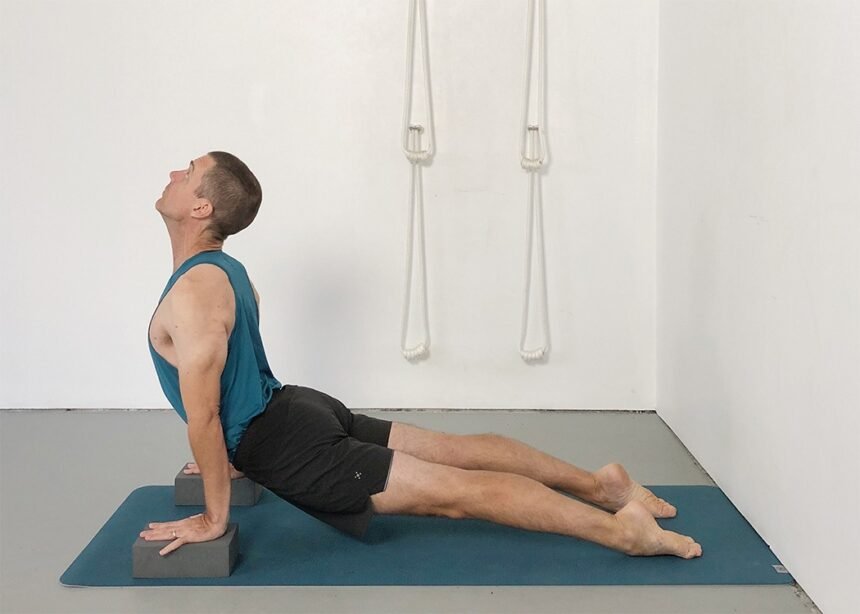
Upward Facing Dog is a fundamental backbend commonly practiced in dynamic yoga sequences such as Sun Salutations.
In this posture:
- The chest lifts and opens forward
- The spine extends into a gentle backward arch
- The arms support the upper body weight
- The legs remain engaged and active
Unlike passive stretching poses, this posture requires strength and control. The back muscles must actively lift the chest while the arms stabilize the torso. This combination makes it both a strength-building and flexibility-enhancing posture.
The pose also promotes coordination between different muscle groups, which is important for maintaining long-term spinal health.
Benefits of Urdhva Mukha Svanasana for Back Pain
Urdhva Mukha Svanasana is highly valued in yoga therapy for supporting spinal health and relieving mild muscular back pain. This pose works by strengthening the muscles that support the spine while also improving posture and spinal mobility. Many people who experience back discomfort due to long hours of sitting, poor posture, or muscle weakness may benefit from practicing this pose regularly and mindfully.
The backbend action helps open the chest, improve breathing patterns, and release tension stored in the shoulders and upper back. At the same time, the pose encourages better blood circulation to spinal muscles, which can support faster muscle recovery and reduce stiffness. When practiced with proper alignment, controlled breathing, and gradual progression, this pose can be an effective part of a back care yoga routine.
1. Strengthens Back Muscles
One of the primary ways this pose helps with back pain is by strengthening the muscles surrounding the spine, including the erector spinae and upper back stabilizers.
Strong spinal muscles help:
- Maintain upright posture during daily activities
- Reduce pressure on spinal discs
- Prevent muscle fatigue during prolonged sitting
Many chronic back problems are linked to muscle weakness rather than structural damage. Gradual strengthening through yoga can help restore muscular balance and spinal stability.
2. Improves Posture
Poor posture is one of the leading causes of upper back and neck pain. Upward Facing Dog helps counteract rounded shoulders and forward head posture.
The pose encourages:
- Chest expansion
- Shoulder blade retraction
- Lengthening of the spine
People who work long hours at computers often develop tight chest muscles and weak upper back muscles. This pose helps rebalance those muscle groups.
3. Increases Spinal Flexibility
Spinal mobility is essential for pain-free movement. Upward Facing Dog gently increases flexibility across all regions of the spine.
Improved spinal flexibility helps:
- Reduce stiffness caused by inactivity
- Improve movement efficiency
- Support healthier joint mechanics
However, flexibility should always be developed slowly and safely. Forcing the backbend can cause strain rather than relief.
4. Opens the Chest and Improves Breathing
Chest opening is not only a physical benefit but also a respiratory one. When the chest expands, lung capacity improves, allowing for deeper and more efficient breathing.
Better breathing can:
- Reduce stress-related muscle tension
- Improve oxygen delivery to tissues
- Promote relaxation of the nervous system
Many people carry tension in their chest and shoulders due to stress, and this pose helps release that tension.
5. Enhances Blood Circulation
Backbends naturally stimulate blood circulation to the spine, muscles, and surrounding tissues. Increased circulation helps remove metabolic waste and deliver nutrients to recovering muscles.
This is especially helpful for people who sit for long periods because prolonged sitting restricts blood flow to lower back muscles.
When Urdhva Mukha Svanasana Can Help Back Pain
This pose is most beneficial for people experiencing:
- Mild muscular back pain
- Postural discomfort
- Tight shoulders and chest muscles
- Stiffness from inactivity
It works best for muscular fatigue rather than structural spinal injuries.
Risks and Precautions
Despite its benefits, this pose is not suitable for everyone. Improper execution can increase spinal compression or strain.
You should avoid or modify this pose if you have:
- Severe lower back pain
- Herniated or bulging spinal discs
- Recent spinal surgery
- Wrist injuries (since weight is placed on hands)
- Advanced pregnancy
If you feel sharp pain instead of mild muscle engagement, stop immediately.
Common Mistakes That Can Cause Back Pain
Backbends like Urdhva Mukha Svanasana can be highly beneficial for spinal strength and flexibility, but only when practiced with proper alignment and control. Many people experience back discomfort not because of the pose itself, but because of small technical mistakes. Backbends should feel strong, supported, and comfortable rather than forced or painful. Moving slowly, breathing steadily, and keeping the body properly engaged can help protect the spine while still allowing you to enjoy the benefits of this posture.
Collapsing Into the Lower Back
Collapsing into the lower back is one of the most common mistakes in this pose. This happens when the chest is pushed upward without sufficient support from the core and leg muscles. When this occurs, excessive pressure is placed on the lumbar spine, which can lead to muscle strain and long-term discomfort. To prevent this, focus on lengthening the spine rather than deepening the arch of the back. Gently engage the abdominal muscles, press the tops of the feet firmly into the mat, and keep the legs active. Distributing effort evenly across the body helps maintain a safe and stable backbend.
Locking the Elbows
Another common mistake is locking the elbows while holding the pose. Locked elbows shift body weight directly into the joints, which can cause wrist pain and reduce muscular support in the arms and shoulders. Instead, keep a small micro-bend in the elbows to maintain muscle engagement and protect the joints. This allows the arms to act as strong supportive pillars rather than rigid structures.
Shrugging Shoulders Toward the Ears
Many practitioners unintentionally raise their shoulders toward their ears while trying to hold the pose longer. This creates tension in the neck and upper back. To correct this, gently draw the shoulder blades downward and slightly toward the spine. Keeping the shoulders relaxed helps open the chest more naturally while reducing neck strain and improving breathing comfort.
Forcing Depth of Backbend
Forcing the body into a deeper backbend than it is ready for can increase the risk of injury. Backbends are about strength and control, not maximum flexibility. If you feel sharp pain, pinching, or discomfort in the spine, you may be going too deep. Focus instead on building gradual flexibility through consistent practice. A safe backbend should feel strong, stable, and supported rather than strained or forced.
Proper Technique for Safe Practice
Step 1: Lie Face Down on the Mat
Begin by lying comfortably on your stomach with legs extended. Allow your body to relax for a moment before starting movement. The forehead or chin can rest lightly on the mat to help release tension in the neck.
Step 2: Place Palms Under Shoulders
Position your palms directly under your shoulders with fingers spread wide. Wide finger placement improves stability and helps distribute body weight across the hands rather than concentrating pressure in the wrists.
Press firmly through the base of the fingers and knuckles while keeping wrists straight and strong.
Step 3: Press Tops of Feet Into the Floor
Engaging the legs is just as important as engaging the arms. Press the tops of the feet firmly into the mat while keeping legs active. The quadriceps should gently tighten to support the pelvis.
Strong leg engagement helps reduce pressure on the lower back by sharing the workload between upper and lower body.
Step 4: Inhale and Lift the Chest
As you inhale, slowly lift the chest forward and upward. Think about moving the heart center forward rather than simply lifting upward.
Avoid throwing the head backward. The neck should remain long and aligned with the spine.
Step 5: Straighten Arms While Keeping Shoulders Relaxed
Straighten the arms gradually while maintaining soft shoulders. Imagine your chest is leading the movement while your arms provide support.
Step 6: Engage Core and Leg Muscles
Core engagement prevents the lower back from over-arching. Slightly tighten abdominal muscles without holding breath or creating tension.
Leg engagement stabilizes the pelvis and helps maintain spinal integrity.
Step 7: Keep Neck Long and Gaze Forward
The neck should remain an extension of the spine. Look slightly forward rather than upward to avoid cervical strain.
Breathing Coordination
Breath is essential for safe yoga practice.
- Inhale while entering the pose
- Exhale while gently releasing
Breathing slowly helps activate the parasympathetic nervous system, reducing muscle tension.
How Long Should You Hold the Pose?
Beginners should focus on proper alignment rather than endurance. Holding the pose too long with poor form can cause strain.
- Beginners: 10–20 seconds
- Intermediate: 30–45 seconds
- Advanced: Up to 1 minute with controlled breathing
Quality of movement always matters more than duration. It is better to hold correctly for a shorter time than to hold incorrectly for longer.
Urdhva Mukha Svanasana vs Other Back Pain Relief Poses
While this pose is beneficial, it works best when combined with counter-stretches. Backbends should be balanced with forward bends to maintain spinal equilibrium.
For example, gentle forward folds help release tension in the lower back after practicing backbends. Restorative poses help relax the nervous system and allow muscles to recover.
A balanced yoga practice includes both strengthening and releasing movements.
Who Should Practice Carefully?
People with existing spinal conditions should approach this pose cautiously. Working with professionals such as yoga therapists or physical therapists can help create safe progressions.
Special attention should be given to:
- People recovering from injuries
- Older adults with joint sensitivity
- Individuals with chronic pain conditions
Slow, controlled practice is always safest.
When to Avoid This Pose
Stop practicing immediately if you experience:
- Sharp or stabbing spinal pain
- Numbness or tingling in legs or arms
- Severe joint discomfort
- Sudden muscle spasms
Pain is the body’s way of signaling that movement should be modified or paused.
Final Thoughts
Is Urdhva Mukha Svanasana good for back pain? The answer is yes — when practiced with proper alignment, patience, and body awareness.
This pose strengthens spinal muscles, improves posture, enhances flexibility, and supports healthy breathing patterns. However, it should always be practiced as part of a balanced yoga routine rather than as a standalone treatment for chronic back problems.
Yoga is most effective when practiced slowly and consistently. Over time, mindful practice of Upward Facing Dog can help maintain spinal health, improve mobility, and reduce future back discomfort.