
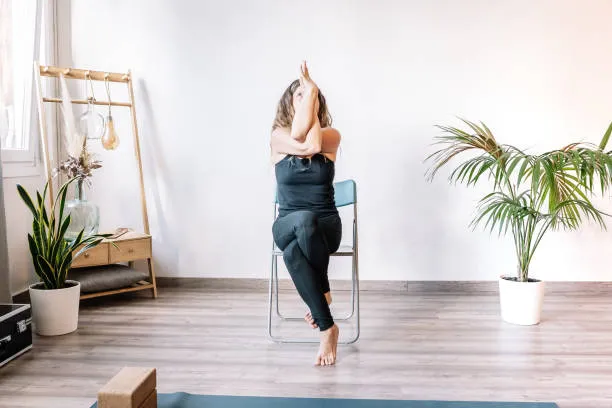
Garudasana (Eagle Pose) is a powerful standing balance posture that builds strength, stability, and deep concentration. At first glance, the pose may look compact and tightly wrapped, but within that stillness lies intense muscular engagement and mental focus. By intertwining the arms and legs, Garudasana challenges coordination while improving flexibility in the shoulders, hips, and ankles. It is commonly included in standing yoga sequences to enhance balance and sharpen body awareness.
- What is Garudasana (Eagle Pose)?
- Key Benefits of Garudasana
- Step-by-Step Guide to Perform Garudasana
- Step 1: Start in Mountain Pose (Tadasana)
- Step 2: Bend Your Knees Slightly
- Step 3: Wrap One Leg
- Step 4: Wrap the Arms
- Step 5: Sink & Hold
- Step 6: Release & Switch Sides
- Common Mistakes in Garudasana (And How to Fix Them)
- Beginner Modifications
- Contraindications & Safety Precautions
- How to Add Garudasana to Your Routine
- Conclusion
The name Garudasana comes from two Sanskrit words: Garuda, meaning “eagle,” and asana, meaning “pose” or “posture.” In yogic mythology, Garuda is known as the powerful, majestic bird and the mount of the deity Vishnu. The pose symbolizes strength, vision, and unwavering focus—qualities often associated with an eagle soaring high while remaining sharply attentive.
What makes Eagle Pose especially powerful is its ability to improve both physical balance and mental concentration at the same time. As you root down through one foot and stabilize your body, your mind must remain calm and steady. Even the slightest distraction can disrupt your posture. This makes Garudasana not just a physical exercise, but a mindfulness practice that trains you to stay centered, focused, and present.
What is Garudasana (Eagle Pose)?
Garudasana, commonly known as Eagle Pose, is a standing balance posture that combines strength, flexibility, and focus. By wrapping the arms and legs around each other, the pose creates a compact and stable structure that challenges coordination and balance. It is widely practiced in yoga routines to build lower body strength, improve posture, and enhance mental clarity.
- Sanskrit Breakdown: Garuda (mythical eagle) + Asana (pose)
- Type of Pose: Standing balance posture
- Yoga Category: Balancing / Strengthening
- Level: Beginner to Intermediate
Key Benefits of Garudasana
Garudasana, or Eagle Pose, is a yoga posture that strengthens the body, sharpens the mind, and improves overall balance. Physically, it engages the legs and core, building strength in the thighs, calves, and ankles while also promoting stability. The arm and shoulder wrap stretches the upper back and shoulders, helping to release tension and improve flexibility. This combination of engagement and stretch also encourages proper posture and supports joint stability, making it an excellent pose for overall body alignment.
Mentally, Garudasana is a posture of focus and mindfulness. Balancing on one leg while coordinating the arms and legs requires concentration, helping to cultivate mind-body awareness. The grounding nature of the pose also reduces stress, calms the nervous system, and encourages a sense of emotional balance.
Some of the key physical and mental benefits of Garudasana include:
- Strengthens the lower body and stabilizes the joints
- Improves balance and coordination
- Opens shoulders and stretches the upper back
- Enhances concentration and mental clarity
- Encourages mindfulness and stress relief
The pose engages multiple muscle groups, including the quadriceps, hamstrings, glutes, deltoids, and upper back muscles. This makes Garudasana a full-body exercise that strengthens, stretches, and aligns the body while training the mind to remain focused and present. Practiced regularly, it helps improve overall stability, posture, and mental focus, making it a holistic addition to any yoga routine.
Step-by-Step Guide to Perform Garudasana
Garudasana, or Eagle Pose, is a yoga posture that improves balance, strengthens the legs and core, and stretches the shoulders and upper back. Follow these steps to perform it safely and effectively.
Step 1: Start in Mountain Pose (Tadasana)
Stand tall with your feet together. Engage your core, lengthen your spine, and relax your shoulders. Take a few deep breaths to center yourself.
Step 2: Bend Your Knees Slightly
Shift your weight onto your left foot. Keep your left leg strong and stable while slightly bending your knees.
Step 3: Wrap One Leg
Cross your right thigh over your left. If possible, hook your right foot behind your left calf. Ensure both hips stay level and maintain your balance.
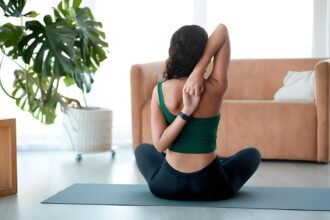
Step 4: Wrap the Arms
Extend your arms forward at shoulder height. Cross your left arm over the right, bend your elbows, and bring your palms together. Keep your shoulders relaxed and lifted.
Step 5: Sink & Hold
Lower your hips slightly while keeping your spine upright. Focus on grounding through your standing leg and finding stability. Hold the pose for 20–30 seconds while breathing steadily.
Step 6: Release & Switch Sides
Gently unwind your arms and legs. Return to Mountain Pose. Take a moment to breathe, then repeat the pose on the opposite side, crossing the left leg over the right and the right arm over the left.
Tips for Better Balance:
- Keep your gaze steady on a fixed point (drishti).
- Engage your core to maintain stability.
- Move slowly in and out of the pose to avoid losing balance.
- Beginners can practice near a wall for support.
Alignment Tips for Perfect Form
To get the most benefit from Garudasana and prevent strain, keep a few key points in mind:
- Keep your hips square and avoid twisting your torso
- Do not lean forward; maintain an upright spine
- Keep elbows lifted to shoulder height for proper arm alignment
- Engage your core to stay stable on one leg
- Focus your gaze (Drishti) on one fixed point to enhance balance
By combining proper alignment with mindful breathing, Garudasana becomes both a physical and mental exercise, improving strength, balance, and concentration simultaneously.
Common Mistakes in Garudasana (And How to Fix Them)
Garudasana, or Eagle Pose, is a challenging balance pose that tests flexibility, coordination, and focus. Many beginners and even experienced practitioners make subtle mistakes that compromise alignment and increase the risk of strain or injury. Understanding these common errors and learning how to correct them will improve stability, maximize benefits, and make the pose safer and more enjoyable.
1. Leaning Too Far Forward
A common error is leaning the torso forward, which shifts the weight away from the standing foot and places unnecessary stress on the lower back. This misalignment also makes it harder to maintain balance.
Fix: Keep your chest lifted and spine long. Engage the core and think of stacking your hips directly above your standing foot. Imagine a string pulling the crown of your head upward to maintain length, while keeping shoulders relaxed.
❌ 2. Not Engaging the Core
Without activating the abdominal muscles, your body lacks the stability needed to balance in Garudasana. This can lead to wobbling, falling, or overcompensating with other muscles like the lower back.
Fix: Draw your navel gently toward the spine and tighten your core before wrapping your legs. This provides a strong foundation and supports proper posture, making it easier to hold the pose steadily.
3. Forcing the Foot Hook
Many attempt to wrap the lifted leg tightly around the standing leg, which can strain the knees, hips, or ankles. Forcing the foot hook often leads to discomfort and poor alignment.
Fix: If you cannot comfortably hook the foot behind the calf or thigh, keep your toes lightly touching the floor or wrap the leg around the calf instead. Focus on balance and length through the spine rather than forcing the perfect leg wrap.
4. Dropping Elbows
Drooping or collapsing the arms reduces shoulder engagement and diminishes the energizing effect of Garudasana. It can also contribute to tension or strain in the shoulders and upper back.
Fix: Lift your elbows slightly above wrist level and keep forearms parallel to the floor. This opens the shoulders, engages the upper back, and promotes proper alignment while maintaining the arm wrap.
5. Holding Breath
Many practitioners unconsciously hold their breath when struggling to balance, increasing tension and fatigue in the body. Proper breathing is essential for stability and relaxation in the pose.
Fix: Maintain slow, steady inhalations and exhalations. Coordinate breath with movement—inhale to elongate the spine and exhale to deepen the leg and arm wraps. This keeps the body calm and balanced.
Beginner Modifications
Starting Garudasana can feel intimidating, especially if balance, flexibility, or joint mobility is limited. Thankfully, there are simple modifications that make this pose accessible to beginners while still building strength and focus. These adjustments allow practitioners to develop proper form gradually, reducing the risk of injury and frustration.
- Use a Wall for Balance: Stand near a wall and lightly touch it for stability as you practice the leg and arm wraps. This helps build confidence and reduces fear of falling.
- Skip the Foot Hook: If hooking the lifted foot is difficult or uncomfortable, rest it lightly against the floor or wrap it around the calf. Focus on alignment and balance instead of the perfect leg wrap.
- Keep Toes on the Floor: Maintaining contact with the floor provides extra support while still engaging the lifted leg and challenging balance gently.
- Practice Only the Arm Variation First: Begin by mastering the arm wrap independently. Once comfortable, combine it with the leg wrap to gradually build coordination and strength.
Advanced Variations
Once you’ve developed balance, strength, and flexibility, Garudasana can be modified and intensified with advanced variations. These variations challenge different muscle groups, enhance core engagement, and create dynamic flows for experienced practitioners.
- Forward Fold Eagle: From Garudasana, hinge at the hips and fold forward. This stretches hamstrings, deepens hip opening, and challenges balance simultaneously.
- Eagle Crunch (Core Challenge): Wrap your legs and arms, then draw your elbow and knee together in a slow, controlled crunch. This intensifies core engagement and tests coordination.
- Transition into Warrior III: Release the arm wrap while keeping the leg lifted, extend it back, and reach your arms forward into Warrior III. This creates a smooth, flowing transition between poses and improves balance endurance.
Contraindications & Safety Precautions
Garudasana involves deep hip, knee, ankle, and shoulder engagement, so certain conditions require caution or modification. Practicing with awareness and appropriate adjustments ensures safety and reduces the risk of strain or injury.
- Recent Knee Injury: Avoid deep leg wraps, as the knee joint may be vulnerable. Keep the foot lightly resting or on the calf.
- Ankle Instability: Practice near a wall or chair for support, and consider skipping the foot hook to reduce strain.
- Shoulder Injury: Modify the arm wrap by keeping hands at chest level or using a yoga strap to prevent aggravation.
- Pregnancy: Practice near support for extra stability, avoid compressing the abdomen, and keep modifications gentle and comfortable.
How to Add Garudasana to Your Routine
Incorporating Garudasana into a regular yoga or fitness routine enhances balance, coordination, and focus. With mindful practice, it complements other standing poses and strengthens core stability, hip mobility, and shoulder flexibility.
- Include in Standing Sequence: Add Garudasana after Mountain Pose or Warrior I to warm up the legs and hips.
- Pair with Tree Pose or Warrior III: Alternate with other balancing poses to improve concentration and postural control.
- Practice During Balance-Focused Sessions: Highlight Garudasana in sessions dedicated to stability and mindfulness.
- Hold for 3–5 Breaths Each Side: Focus on steady, even breathing and intentional alignment for optimal benefits.
Conclusion
Garudasana offers a combination of physical strength, flexibility, and mental focus. It challenges the body while cultivating mindfulness and concentration. By practicing mindfully, respecting your limits, and gradually incorporating modifications and variations, you can enjoy its full benefits. Progress may be slow at first, but with consistent practice, patience, and awareness, Eagle Pose becomes a deeply rewarding addition to any yoga routine.